By [Riley/DANSKER Team], Senior Marketing & Engineering Specialist
In the world of automotive electronics, specifically within the competitive landscapes of North America and Europe, the “Plug-and-Play” USB dash cam has evolved far beyond a simple lens-and-sensor combo. At DANSKER, our R&D focus is consistently pushed toward one goal: Image Fidelity.
One term you will frequently see in our technical specifications is 3D Noise Reduction (3DNR). While it may sound like marketing jargon, it is a sophisticated digital signal processing (DSP) technique that separates a mediocre “safety camera” from a high-performance “evidence recorder.”
1. What exactly is 3D Noise Reduction (3DNR)?
To understand 3DNR, we must first look at its predecessor, 2DNR (Spatial Noise Reduction). 2DNR analyzes each individual frame and attempts to smooth out “salt-and-pepper” grain. However, this often results in a “blurred” or “painterly” effect.
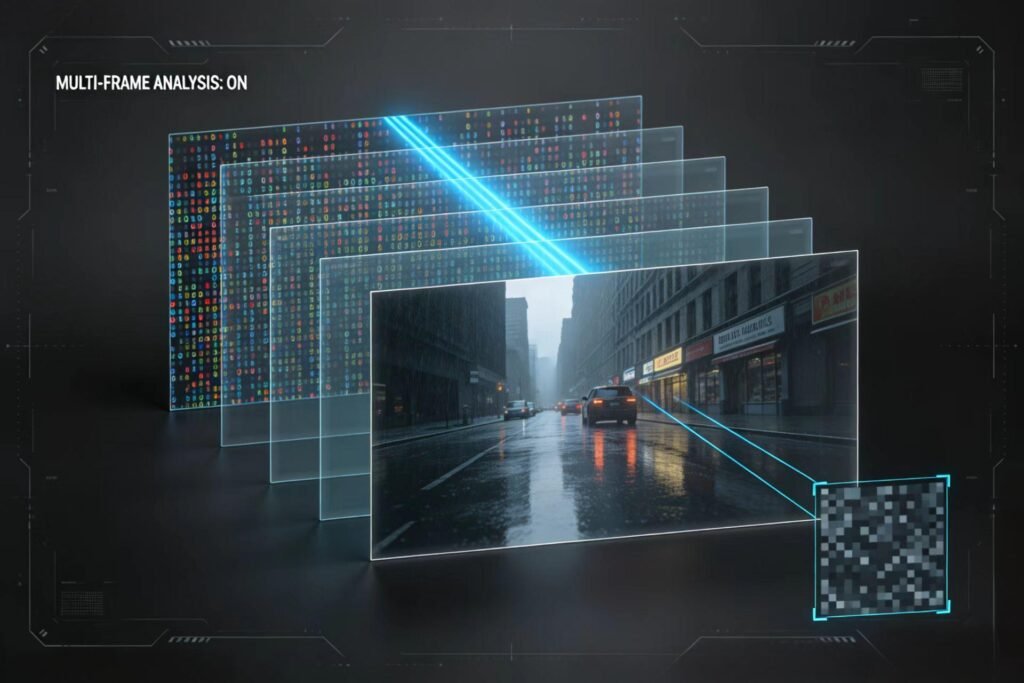
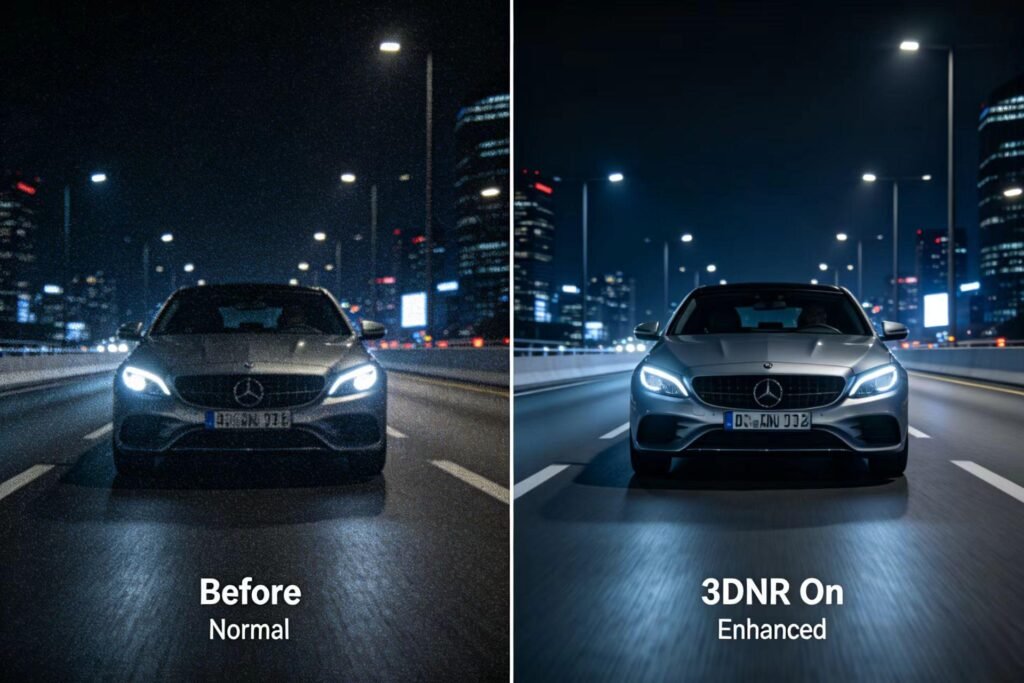
3DNR (Temporal Noise Reduction) adds the dimension of time. Instead of looking at just one frame, the Image Signal Processor (ISP) compares multiple consecutive frames. It identifies pixel-level inconsistencies that change rapidly over time (random noise) while keeping the static elements (the road, signs, and license plates) sharp. It effectively filters out the “static” by averaging the pixel values across the temporal sequence.
2. Hardware Requirements: What’s Under the Hood?
Implementing true 3DNR in a USB-connected device is not trivial. It places significant demands on the dash cam’s internal architecture:
- High-Performance ISP/SoC: The “brain” of the camera must have the computational throughput to process and compare frames in real-time. In DANSKER products, we utilize chipsets with dedicated hardware acceleration for temporal filtering.
- DDR Memory Buffer: To compare Frame A with Frame B and C, the device needs sufficient high-speed RAM (DDR3/4) to temporarily store these frames.
- High-Sensitivity CMOS Sensors: While 3DNR is software-driven, it works best when paired with sensors (like the Sony STARVIS series) that have a high Signal-to-Noise Ratio (SNR). A poor sensor creates too much “thermal noise” for even the best 3DNR to fix.
3. The Value Proposition: Why Does It Matter?
For the end-user, 3DNR provides three critical advantages:
- Enhanced License Plate Recognition (LPR): By removing the “fuzz” around alphanumeric characters, the chances of capturing a legible plate in a hit-and-run scenario increase exponentially.
- Storage Efficiency: Video compression (H.264/H.265) hates noise. Random grain is treated as “movement,” which spikes the bitrate and fills up SD cards faster. 3DNR cleans the image, allowing for cleaner compression and longer recording times.
- Visual Comfort: It produces a “cinematic” and stable image that is easier for the human eye (and insurance adjusters) to parse.
4. Market Reality: Is it a “Must-Have” in Europe and North America?
In my professional opinion: Yes. In regions like the UK, Germany, or Scandinavia, drivers often face “gray” weather, heavy rain, or long winter nights. Similarly, in the US and Canada, high-speed highway driving requires extreme clarity to capture incidents across multiple lanes.
The Western market demands evidence-grade video. A dash cam without 3DNR often fails at the one task it was bought for: providing a clear, undeniable record of an event when lighting conditions are suboptimal.
5. Why 3DNR Shines at Night
You may notice that 3DNR seems “invisible” during a sunny day in California but “miraculous” at night in London. This is due to ISO Gain.
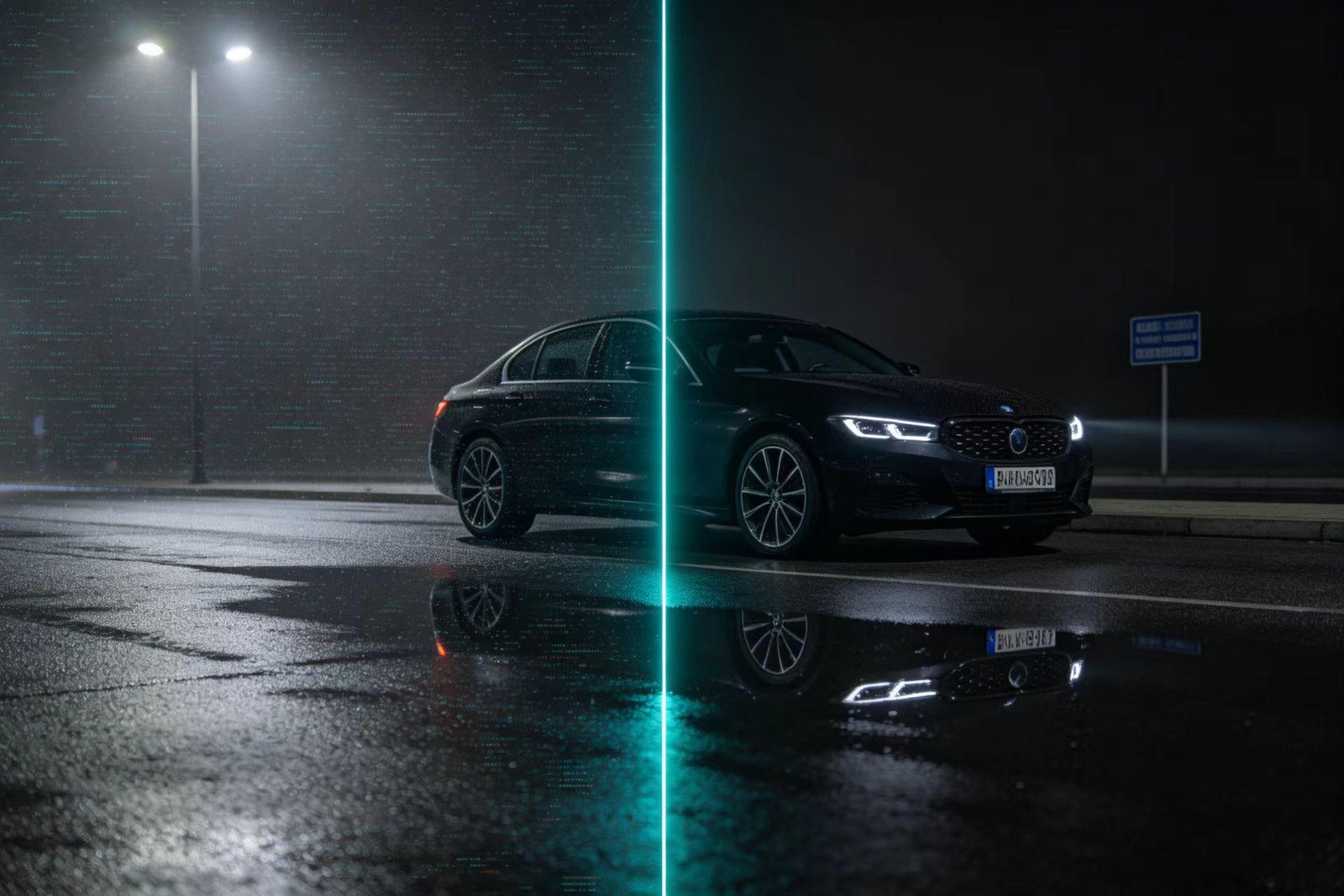
In low light, the camera sensor must “amplify” the light signals it receives. This amplification also amplifies thermal and shot noise, creating a grainy “snow” across the image. Because this noise is completely random from one millisecond to the next, the 3DNR algorithm can easily identify it by comparing it against previous frames. In daylight, the signal is so strong that the noise is negligible, giving 3DNR less work to do.
Engineer’s Summary:
As an engineer, I view 3DNR not as a “luxury feature,” but as a fundamental requirement for modern automotive safety. It is the bridge between a high-resolution sensor and a usable piece of evidence. By utilizing temporal logic to clean the image, we ensure that DANSKER products provide the clarity needed when it matters most. If you are looking for a dash cam for the demanding roads of Europe or America, 3DNR is the benchmark for quality.