By: [Lucas/Senior R&D Engineer at DANSKER]
The automotive electronics industry is changing fast. For a company like DANSKER, staying ahead means moving beyond simple video recording. In the North American and European markets, drivers now demand active safety features. The most critical shift is the move from passive recording to active driver assistance. Blind Spot Detection (BSD) has traditionally been a premium feature built into expensive vehicle sensors. However, the rise of powerful Edge AI processors now allows us to integrate this technology directly into dash cams. This evolution is vital because urban environments in cities like London, Berlin, and New York are becoming more crowded. Vulnerable Road Users (VRUs), such as pedestrians and cyclists, are at the highest risk. By adding AI-BSD functionality, a dash cam transforms into a life-saving tool. It does not just record an accident; it prevents one. This technology bridges the gap between basic consumer electronics and advanced automotive safety systems, ensuring DANSKER products meet the highest safety standards.
Integrating AI-BSD specifically for pedestrian and cyclist detection requires a deep fusion of hardware and software. From an embedded development perspective, the heart of this system is the Neural Processing Unit (NPU). We no longer rely on simple motion detection. Instead, we use deep learning models like YOLO (You Only Look Once) or SSD (Single Shot MultiBox Detector). These models are optimized for mobile hardware to run in real-time. The camera must capture high-frame-rate video to reduce “motion blur.” This ensures the AI can identify a fast-moving cyclist even in low-light conditions. The software pipeline starts with image acquisition. Then, the ISP (Image Signal Processor) cleans the noise. After that, the NPU performs object detection and classification. We must program the system to distinguish between a static pole and a moving person. This is called “Object Classification.” Once the AI identifies a pedestrian in the blind spot zone, the system calculates the “Time to Collision” (TTC). If the risk is high, the hardware must trigger an immediate alert.
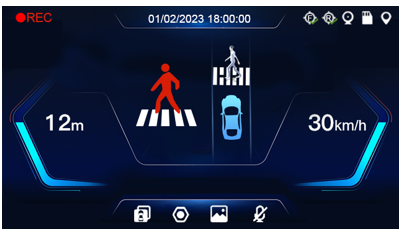
For the European market, precision is key. European roads often have narrow bike lanes right next to car lanes. This requires a very specific “Detection Zone” calibration. We use “Zone Masking” to prevent false positives. If the system beeps at every parked car, the driver will turn it off. Therefore, our software uses “Dynamic Tracking.” It follows the path of a cyclist to predict if their trajectory will intersect with the car. On the hardware side, the heat management is crucial. Running AI models continuously generates significant heat. As an R&D engineer, I ensure we use high-grade thermal pads and ventilated casings. We also focus on “Low Latency.” The delay between the camera seeing the person and the speaker making a sound must be less than 100 milliseconds. This speed is what saves lives in real-world driving. We also integrate these alerts with high-brightness LED indicators that sit on the edge of the device. This provides a visual cue that is easy to see without taking eyes off the road.
Core Technical Integration Points: AI-BSD for Dash Cams
| Core Focus | Technical Implementation | Key Benefit for Drivers |
| Edge AI Processing | Uses dedicated NPU (Neural Processing Units) to run deep learning models like YOLO/SSD directly on the device. | Provides real-time object classification without relying on cloud data, ensuring instant reaction. |
| VRU Detection | Specifically calibrated algorithms to identify Vulnerable Road Users (pedestrians and cyclists). | Reduces accidents in crowded urban areas like London or New York by alerting drivers to hidden risks. |
| Dynamic Zone Masking | Software-defined Detection Zones and “Time to Collision” (TTC) calculations. | Minimizes false positives (nuisance beeps) by ignoring static objects and focusing only on moving threats. |
| Low Latency Hardware | High-speed ISP and thermal management ensuring system response under 100 milliseconds. | Guarantees that the visual and audio alerts occur fast enough for the driver to take corrective action. |
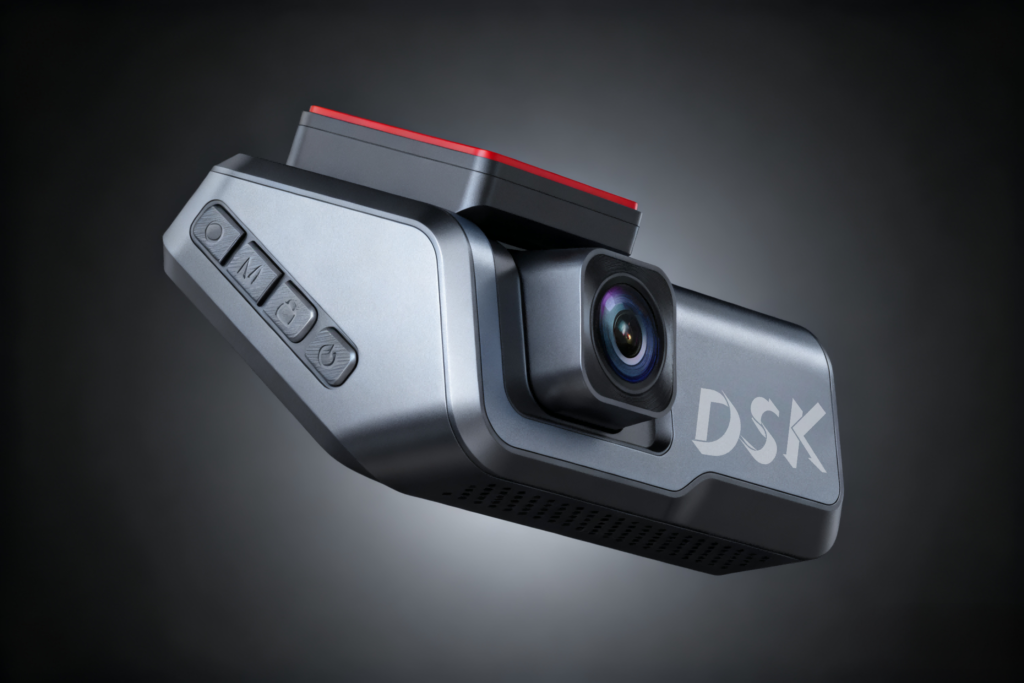
The integration of AI-BSD into DANSKER dash cams represents a major leap in automotive firmware design. We are moving toward a future where “Vision AI” is a standard requirement for all road users. By focusing on the real-time detection of pedestrians and cyclists, we address the most urgent safety needs of the Western markets. This technology combines high-speed embedded processing with smart software algorithms. It provides a reliable safety net for every driver. As we continue to refine these AI models, the accuracy will only improve. DANSKER is committed to delivering these professional-grade safety features to the everyday consumer, making our roads safer for everyone.