By [Olivia/DANSKER Team], Senior Marketing & Engineering Specialist
Why the Lens is the Soul of Your Dash Cam
In the world of automotive electronics, a dash cam is only as good as the light it captures. As we move through 2026, drivers in North America and Europe face increasingly complex road conditions—from the dimly lit rural highways of Scandinavia to the high-speed transit corridors of the United States. At DANSKER, we know that high-definition resolution is only half the story. The true secret to clear, “court-admissible” evidence lies in the Aperture.
The aperture determines how much light enters the camera sensor. It is the difference between seeing a blurry shadow and a clear license plate at 3 AM. Whether you are a fleet manager overseeing hundreds of trucks or a daily commuter, understanding the physics behind F2.0, F1.8, and F1.5 lenses is essential. In this technical deep dive, we will explore why aperture is the most critical hardware choice for your vehicle’s safety.
1. Hardware Factors: The Physics of Light
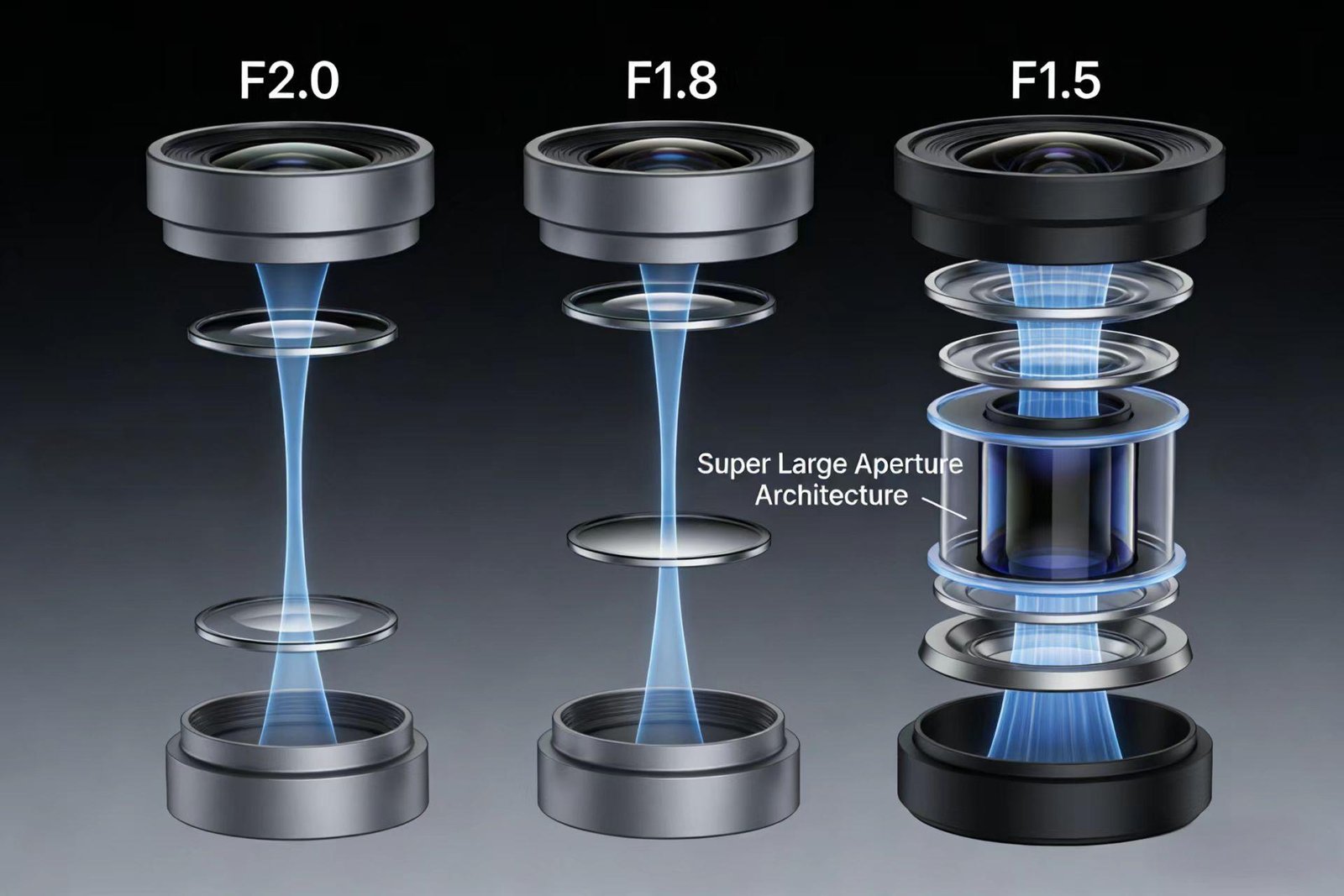
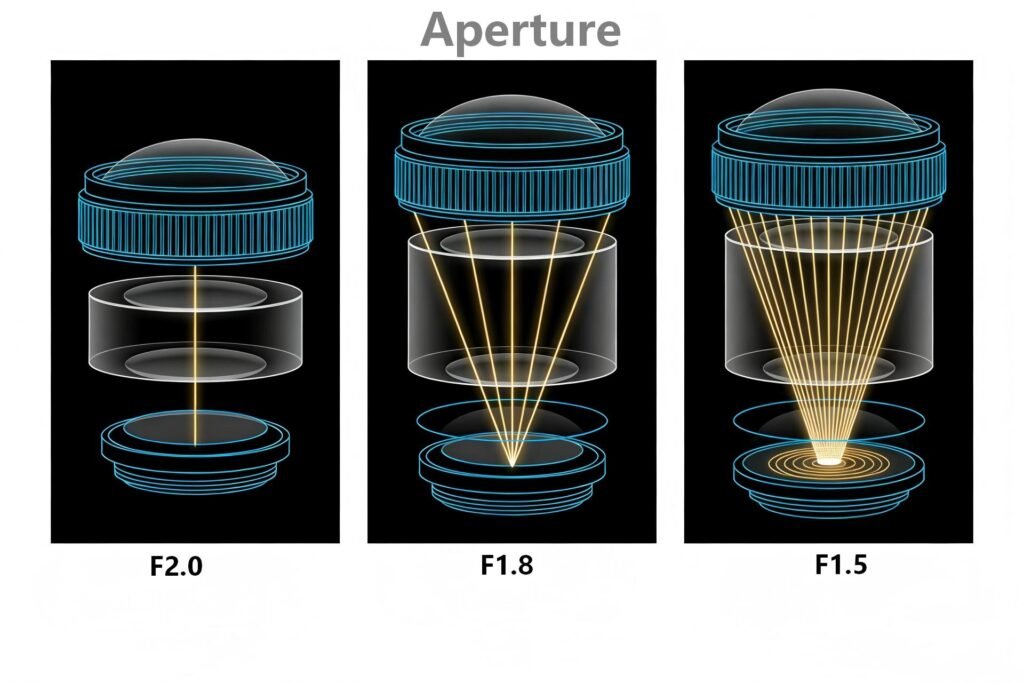
When we design hardware, the aperture (the F-number) dictates how much light reaches the sensor.
- Light Intake: An F1.5 aperture allows significantly more light than an F2.0. This is crucial for night driving.
- Lens Structure: Large apertures require high-quality glass elements. We use multi-layer 6G (6-glass) lenses to prevent distortion at the edges.
- Sensor Match: A large aperture works best with a large sensor (like a 1/2.8″ Sony STARVIS). If the sensor is too small, a large aperture can cause “purple fringing.”
- Coating (IR-Cut): We apply specialized anti-reflective coatings. These reduce internal reflections and ensure light passes through efficiently.
2. Software Factors: Processing the Data
A bigger aperture provides more raw data, but the software (ISP) must manage it correctly.
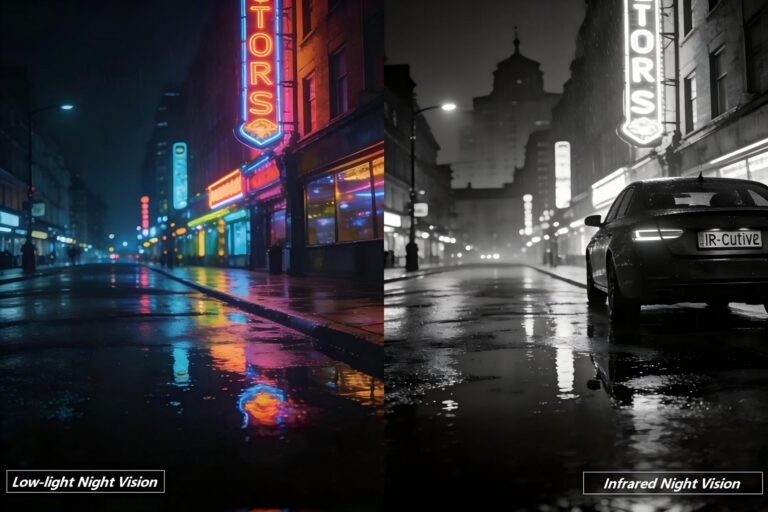
- Dynamic Range (WDR/HDR): Large apertures (F1.5) help in low light but can overexpose in bright sun. We use HDR algorithms to balance the dark and bright spots.
- Highlight Suppression: In cities, streetlights can “bloom.” Our software suppresses these highlights to keep license plates readable.
- Noise Reduction (3DNR): More light means less digital “gain” is needed. This results in a cleaner image with less grain.
- ISP Sharpening: We tune the sharpening levels. Too much sharpening with a wide aperture creates “halos” around objects.
3. The “F-Stop” Breakdown: F2.0 vs. F1.8 vs. F1.5
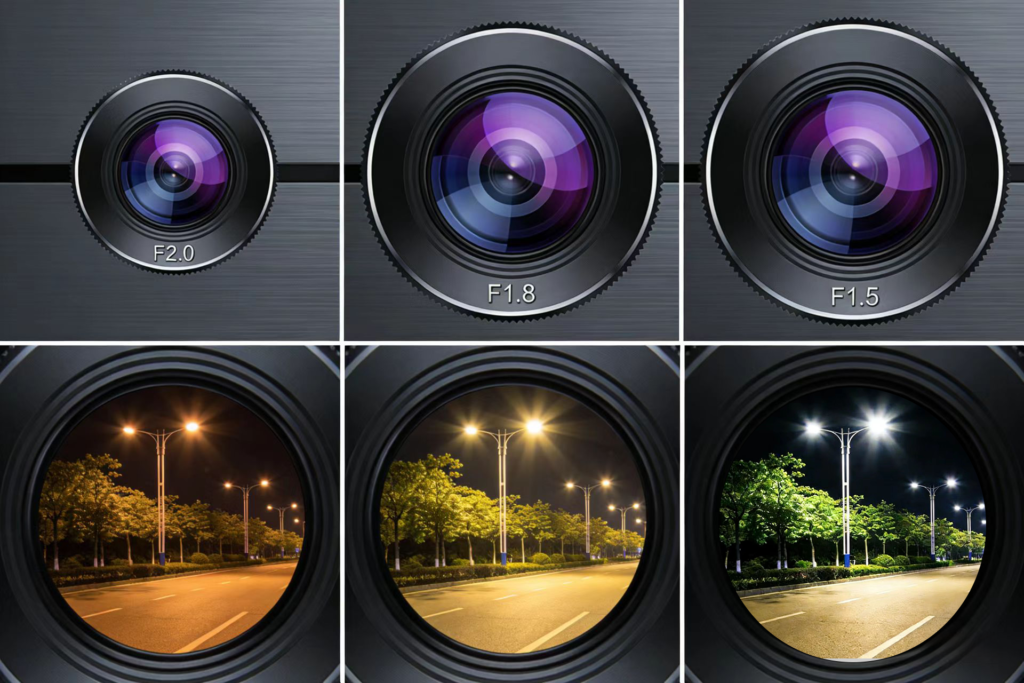
- F2.0 (The Standard): This is a cost-effective choice. It performs well in daylight but struggles in pitch-black rural roads.
- F1.8 (The All-Rounder): This is the “Sweet Spot.” It offers 20-30% more light than F2.0. It provides a great balance of heat stability and night clarity.
- F1.5 (The Professional): This is “Star Light” grade. It captures incredible detail in near-total darkness. However, it is more sensitive to heat-induced focus shift.
4. Application Scenarios
- Civilian Cars (Daily Commute): F1.8 is ideal. It handles city lights and highway driving perfectly.
- Taxis & Rideshare: F1.8 is preferred for durability and consistent focus during long shifts.
- Logistics & Long-Haul Trucks: F1.5 is best. Trucks often drive on unlit highways at 3 AM. They need maximum light intake.
- Police & Emergency Vehicles: F1.5 is required. These users need to capture evidence (license plates) in high-speed, low-light chases.
- Construction & Cold Chain: F2.0 or F1.8 are often used. These vehicles focus on durability in harsh environments where extreme light sensitivity is secondary.
5. Advice for Fleet Managers
If you manage a fleet, do not just buy the biggest aperture. Consider the Total Cost of Ownership (TCO).
- For urban fleets (delivery/taxi), F1.8 is the most practical. It is affordable and reliable.
- For high-risk fleets (fuel transport/emergency), invest in F1.5. The extra cost is worth it for the superior evidence quality at night.
- Always ensure the lens has a metal barrel. Large apertures generate heat, and plastic barrels can warp, causing blurry images.
6. Market Trends (2022-2025): The Rise of F1.8
In the US and European markets, F1.8 remains the best-seller. Why?
Most drivers live in illuminated suburban or urban areas. F1.8 provides “good enough” night vision without the high price tag of F1.5. However, since 2024, we see a shift. Premium users now demand F1.5 as “4K + Large Aperture” becomes the new high-end standard. DANSKER’s F1.5 models are growing in popularity in Nordic countries where winter nights are very long.
Conclusion: Choosing the Right “Eye” for Your Journey
In summary, the aperture is the most important hardware choice for any dash cam. At DANSKER, we believe that “one size does not fit all.”
- F2.0 is a reliable entry point for budget-conscious users.
- F1.8 is the versatile champion for most urban and suburban drivers.
- F1.5 is the professional choice for those who drive in the most challenging dark environments.
For fleet managers and individual drivers alike, the goal is always clarity. You need to see the license plate clearly when it matters most. By balancing the hardware of a wide aperture with the intelligence of modern software, you ensure that your vehicle is always protected. Whether you are driving through the bright streets of London or the dark highways of Norway, make sure your dash cam has the right lens for the job.