By [Olivia/DANSKER Team], Senior Marketing & Engineering Specialist
Beyond the Breaking Point: Engineering Dash Cams for the Extremes of European Logistics
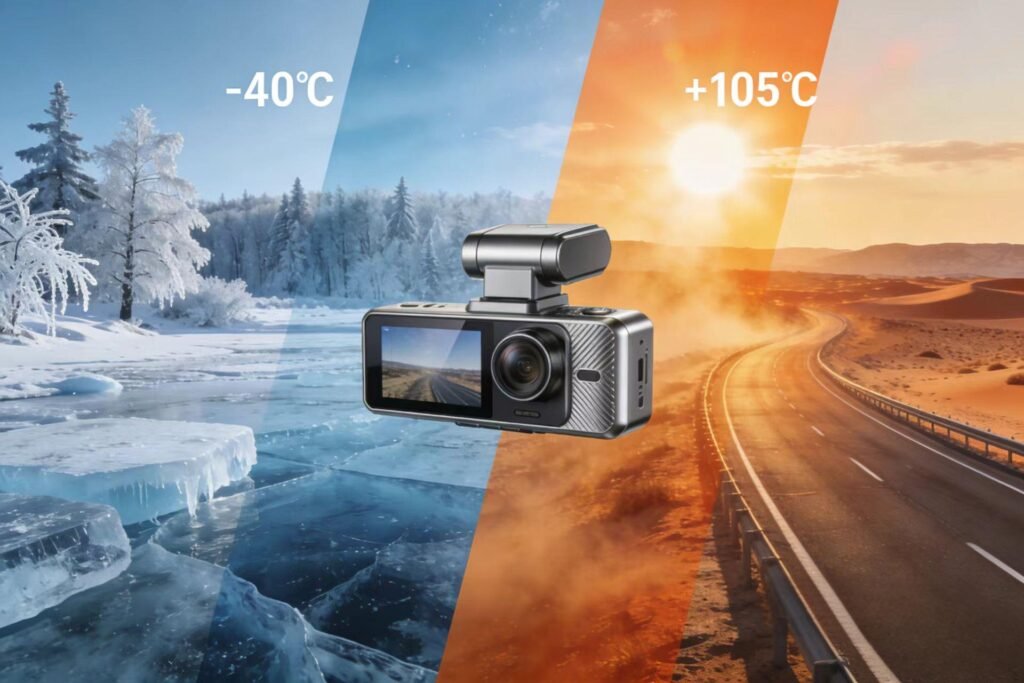
Cross-border logistics in Europe is a test of endurance. A heavy-duty truck might begin its journey in the sub-zero winters of Scandinavia, where temperatures drop to -30°C. Days later, that same vehicle may be idling under the intense sun of Southern Italy or Spain, where cabin temperatures can soar to +85°C. For DANSKER, providing a reliable dash cam for these fleets is not just a matter of recording video. It is about building a hardware architecture that survives a 105°C thermal swing.
Standard consumer dash cams are designed for passenger cars in temperate climates. They often fail when pushed to these limits. In the world of professional cold-chain transport, “fail” means losing critical evidence or missing a safety event. To bridge this gap, we must move beyond basic electronics and embrace true Automotive-Grade engineering.
1. The Foundation: AEC-Q100 Certified Silicon
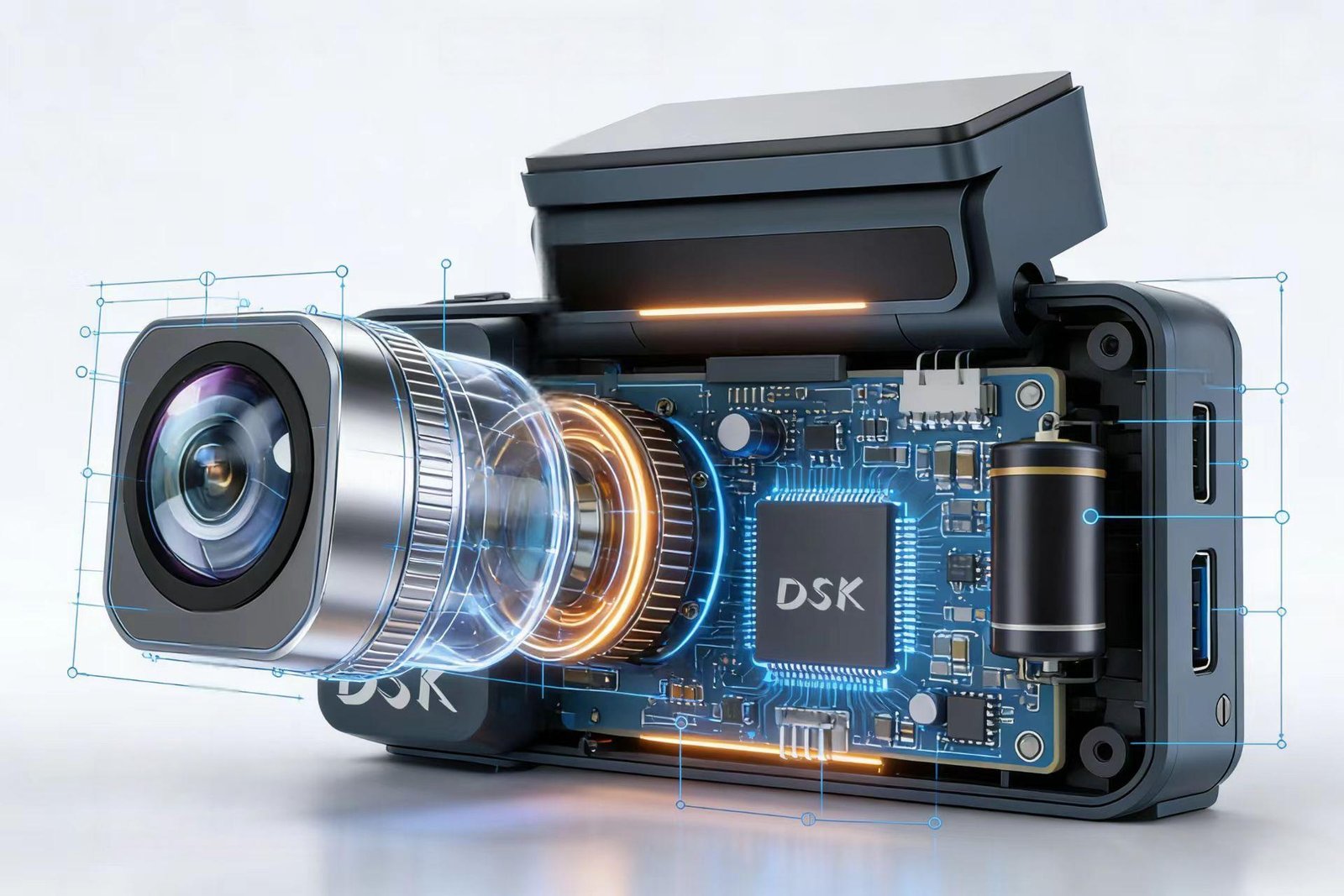
Reliability does not start with the outer casing. It begins at the silicon level. In the European logistics sector, we cannot use standard consumer chips. We must select components that meet the AEC-Q100 standard. This is a critical stress-test qualification for integrated circuits (ICs) used in the automotive industry.
AEC-Q100 Grade 2 components are guaranteed to operate between -40°C and +105°C. This headroom is vital. When a truck in Northern Norway starts its engine after a night in the cold, the dash cam must boot instantly. Conversely, when driving through the heat of the Mediterranean, the System on Chip (SoC) generates its own heat. Without AEC-Q100 certification, chips suffer from thermal runaway—a state where the chip gets hotter, consumes more power, and eventually crashes. By using automotive-grade silicon, DANSKER ensures the brain of the camera never misses a beat, regardless of the weather outside.
2. Structural Integrity: High-TG PCBs and Protection
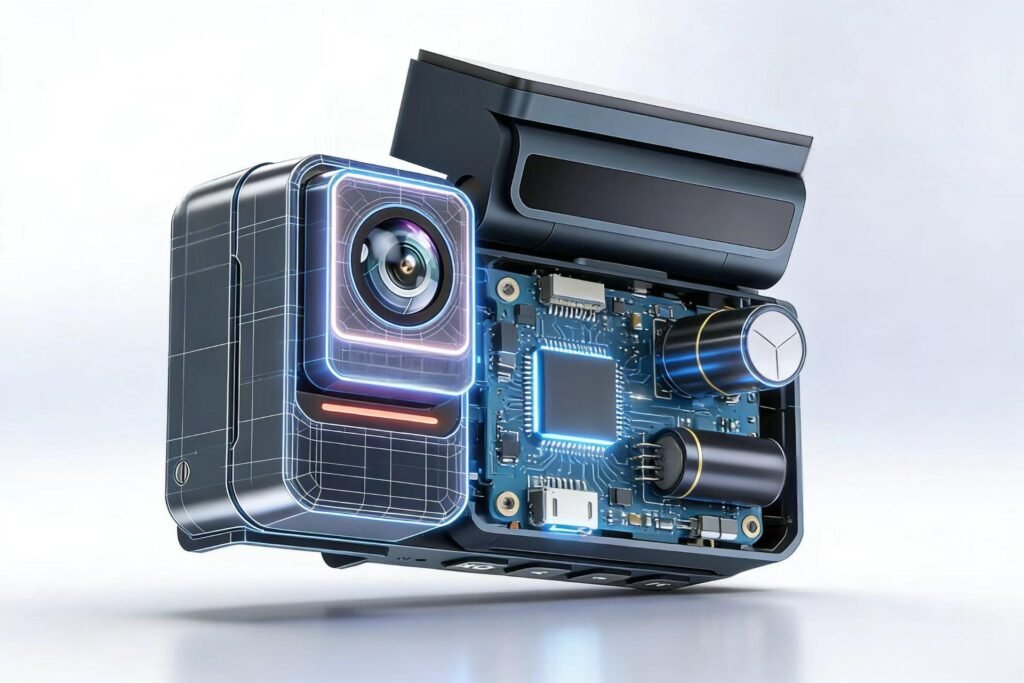
The Printed Circuit Board (PCB) is the backbone of the device. Most standard electronics use low-cost FR-4 material. However, heat causes materials to expand at different rates. In a high-heat environment, a standard PCB can warp, causing solder joints to crack and connections to fail.
To combat this, we use High-TG (Glass Transition Temperature) materials, specifically FR-4 170 or higher. This ensures the board remains rigid and stable even at +105°C. Furthermore, the shift between extreme cold and warmth creates a hidden enemy: condensation. When a truck moves from a frozen outdoor environment into a warm loading bay, moisture forms inside the device. DANSKER applies a specialized Conformal Coating to the entire PCBA. This thin, protective film repels water and prevents short circuits caused by humidity or frost.
3. Energy Safety: Moving Beyond Lithium
One of the biggest failure points in cheap dash cams is the internal battery. Lithium-ion batteries are chemically unstable at high temperatures. At +70°C, they can swell, leak, or even explode. In extreme cold, they lose their ability to hold a charge, preventing the camera from saving the last file if the truck loses power.
For the European professional market, DANSKER has replaced batteries with industrial-grade supercapacitors. These components do not store energy through a chemical reaction, so they are much safer. They operate perfectly in both -40°C and +105°C. Their primary job is to provide “last-gasp” power. If a driver turns off the engine or an accident cuts the power, the supercapacitor provides enough energy to safely close the video file and shut down the system without data corruption.
4. Thermal Management: Passive Heat Dissipation
In a sealed truck cabin, the “greenhouse effect” can make the air inside the vehicle much hotter than the air outside. A plastic-cased camera acts like an insulator, trapping heat inside and cooking the internal components.
We have moved away from plastic housings in favor of Die-cast Aluminum alloys. These metal shells act as a massive heat sink for the entire device. Inside the camera, we use high-conductivity Thermal Pads (with a rating of at least 6.0 W/mK). These pads create a direct physical bridge between the hot SoC and the metal outer shell. This design pulls heat away from the sensitive image sensors and exhausts it into the cabin air. This “passive” cooling is much more reliable than using small fans, which eventually fail due to dust and vibration.
5. Data Survival: pSLC and eMMC Storage
Recording high-definition video creates a constant stream of data. Standard microSD cards are the “weak link” in this chain. Most consumer cards use TLC (Triple-Level Cell) flash, which wears out quickly and fails when it gets hot. When a card fails in a cold-chain truck, you lose hours of vital footage.
DANSKER uses two superior solutions for the European market. First, we integrate eMMC 5.1 storage directly onto the motherboard. This is the same type of storage found in high-end smartphones and automotive infotainment systems. It is much more resistant to vibration and heat than a removable card. For systems that require expandable storage, we mandate the use of pSLC (Pseudo Single Level Cell) cards. These cards are rated for industrial temperatures and offer up to ten times the lifespan of a standard card. They prevent “bit rot”—a phenomenon where data is lost because the storage cells cannot maintain their charge in extreme heat.
6. Optical Clarity: All-Glass Lens Engineering
Finally, we must consider the eyes of the camera. Many budget dash cams use “4G” or “4P2G” lenses, which contain plastic elements. Plastic has a high coefficient of thermal expansion. In the heat of Southern Europe, these plastic lenses warp slightly. This causes the image to go out of focus, making license plates unreadable.
To maintain professional standards, we use 6th-Generation All-Glass (6G) lenses housed in reinforced metal barrels. Glass does not change shape with temperature. Whether the camera is freezing in a Finnish winter or baking in an Italian summer, the focus remains sharp. Furthermore, these lenses are treated with anti-reflective coatings to handle the “glare” common in high-latitude winter sun and intense Mediterranean light.
Core Hardware Breakthroughs for Extreme Logistics
| Key Pillar | Standard Consumer Grade | DANSKER Professional Grade | Engineering Benefit |
| Processor & ICs | Standard Grade (0°C to 70°C) | AEC-Q100 Grade 2 (-40°C to +105°C) | Prevents system crashes and “thermal runaway” in extreme heat. |
| Power Solution | Lithium-ion Battery | Industrial Supercapacitors | Eliminates fire risks in heat and power failure in extreme cold. |
| Housing & Cooling | Plastic Casing / No Heat Sink | Die-cast Aluminum Alloy | Acts as a high-efficiency heat sink to protect internal sensors. |
| Storage Media | Consumer MicroSD (TLC) | eMMC 5.1 & pSLC Cards | Prevents “bit rot” and data corruption during long-haul recording. |
| Optical System | Plastic/Glass Hybrid Lenses | 6G All-Glass + Metal Barrel | Stops focus drift and warping caused by high thermal expansion. |
Conclusion: Reliability as a Competitive Advantage
For DANSKER, engineering for the -40°C to +105°C range is about more than just numbers on a spec sheet. It is about understanding the reality of the European logistics industry. By combining AEC-Q100 components, supercapacitors, and advanced thermal housing, we create a tool that drivers and fleet managers can trust. When the environment is at its worst, our hardware is at its best.