
By: [William/Senior Engineering Lead at DANSKER]
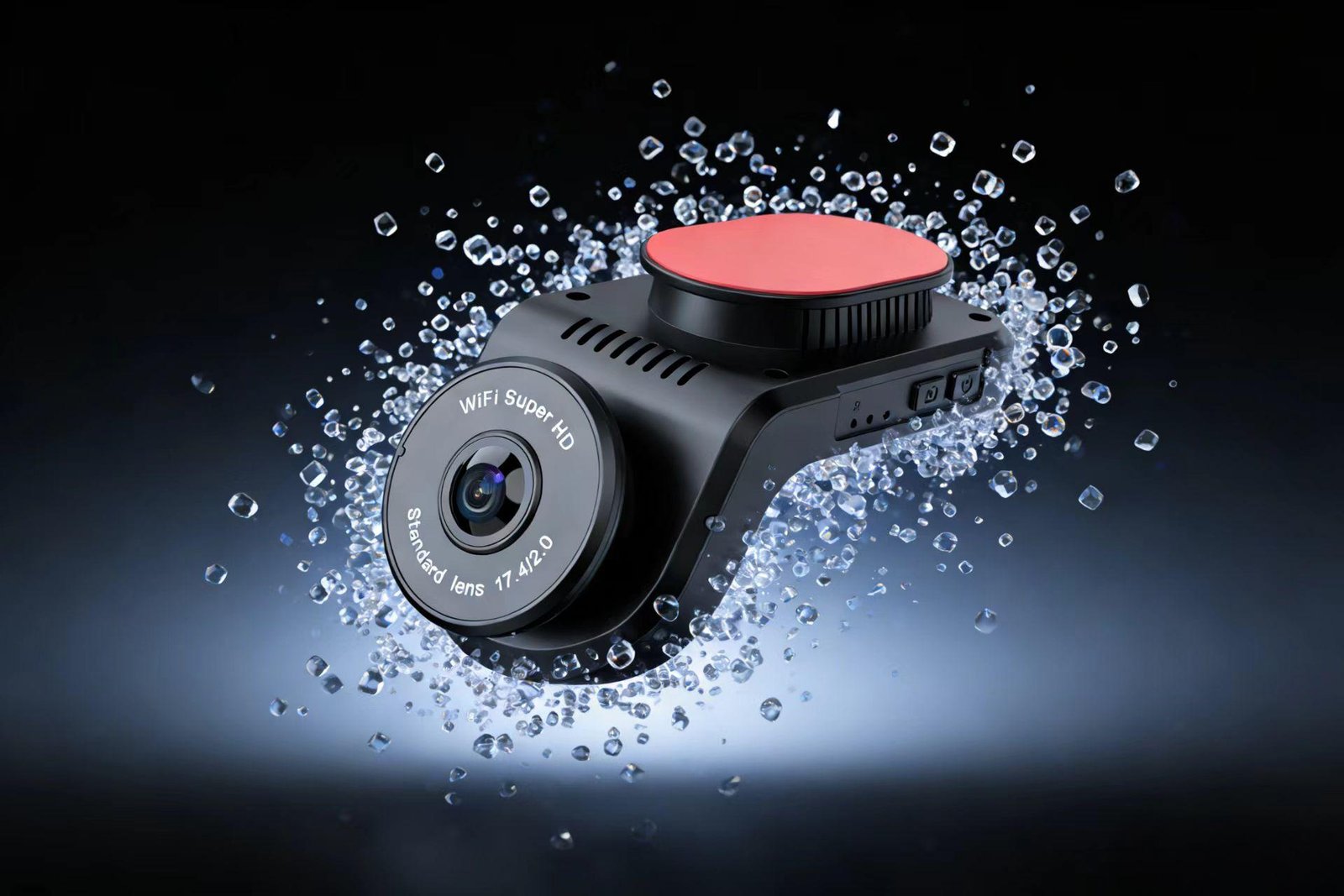
In the world of automotive electronics, “durability” is not just a marketing buzzword—it is a rigorous engineering requirement. For DANSKER products serving the European and North American markets, selecting the right housing material is as critical as the sensor itself. Today, we explore why High-Toughness Engineering Plastics (such as PC/ABS alloys and reinforced Polyamides) have become the gold standard for dash cam construction.
1. Market Evolution: The Dominance of Engineering Plastics (2022-2025)
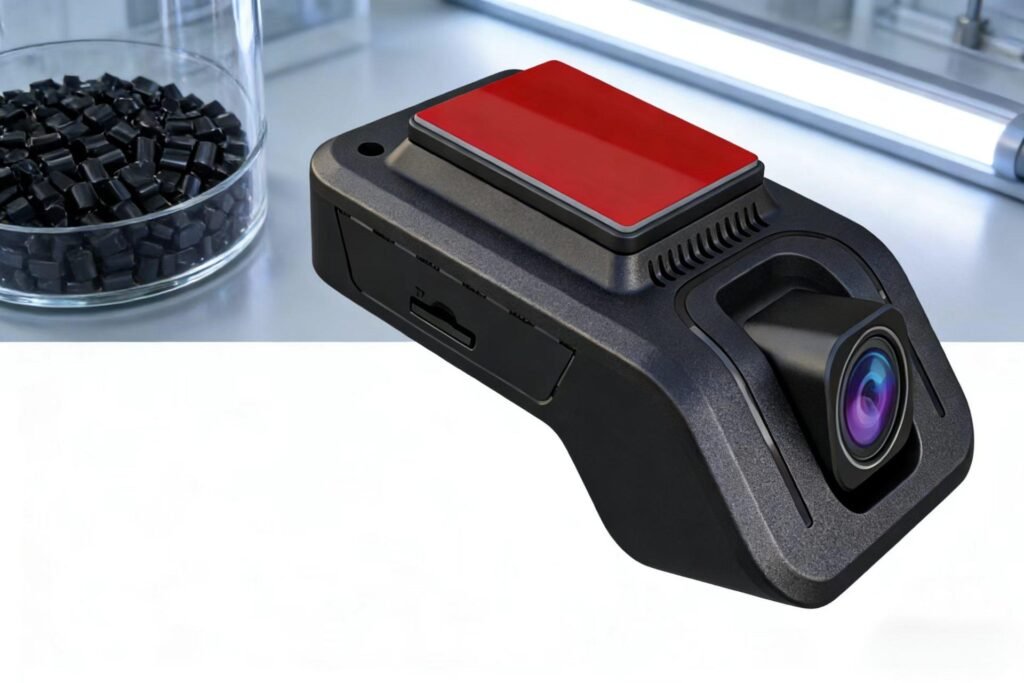
In the European and North American markets, the shift toward high-performance materials has been decisive. Between 2022 and 2025, dash cams utilizing high-toughness engineering plastics have seen their market share grow from approximately 65% to an estimated 85% in the mid-to-high-end segment.
This surge is driven by the increasing demand for “Smart Dash Cams” that house complex AI processors and WiFi/GPS modules, which generate significant heat. Standard plastics simply cannot meet the thermal and structural demands of modern vehicle environments.
2. Material Alternatives: What Lies Beneath the Surface?
When high-toughness engineering plastics are not utilized, manufacturers typically resort to two alternatives, each with specific trade-offs:
- Standard ABS (Acrylonitrile Butadiene Styrene): Commonly found in budget models. While easy to mold, it lacks the UV resistance and thermal stability required for long-term exposure on a sun-drenched windshield.
- Zinc or Aluminum Alloys: Some “premium” models use metal housings for a high-end feel. However, metals are heavier, can interfere with GPS/WiFi signals (EMI shielding challenges), and heat up significantly under direct sunlight, potentially triggering thermal shutdowns.
3. The Pillars of Value: Why High-Toughness Materials Win
From an R&D perspective, high-toughness engineering plastics (like PC/ABS) offer a “best-of-both-worlds” solution:
- Lightweight Body: Every gram matters in automotive design. A lighter device reduces the strain on adhesive mounts and suction cups, preventing the camera from falling during high-speed vibrations.
- Impact Protection: These materials possess high Izod Impact Strength. In the event of a collision, the housing absorbs and dissipates energy rather than shattering, protecting the internal PCB and the crucial SD card containing the accident footage.
- Design Flexibility: Injection molding allows for complex, aerodynamic shapes and integrated heat sinks that are difficult or cost-prohibitive to achieve with metal.
- Cost Control: While the raw resin is more expensive than standard plastic, the high yield rates and lower assembly complexity allow for a more competitive MSRP in markets like Germany and the US.
4. The Safety Imperative: Superior Electrical Insulation
Safety in automotive electronics is synonymous with Galvanic Isolation and fire prevention. High-toughness engineering plastics are inherently non-conductive, providing a critical safety layer:
- Dielectric Strength: These materials act as a natural barrier, preventing short circuits between the internal high-density circuits and the user’s touch.
- Flame Retardancy (UL94-V0): Top-tier dash cams use plastics rated V-0, meaning they self-extinguish within seconds if an internal component fails, preventing a dash cam fault from turning into a vehicle fire.
- Thermal Deformation Resistance: Unlike standard plastics that soften at 70°C, engineering-grade PC/ABS can maintain structural integrity up to 110°C-120°C, crucial for the “greenhouse effect” inside a parked car.
Engineer’s Perspective: The Synergy of Substance and Software
From the vantage point of R&D, a dash cam’s housing is far more than an aesthetic shell; it is a precision-engineered thermal and structural management system. In the harsh environments of North America and Europe—where temperatures inside a parked vehicle can fluctuate by over 50°C in a single day—material integrity is the foundation of software reliability.
As engineers, we prioritize high-toughness engineering plastics because they address the NVH (Noise, Vibration, and Harshness) standards of the automotive industry. A rigid, low-quality plastic shell can introduce micro-vibrations that degrade image stabilization algorithms and interfere with G-sensor calibration. By utilizing PC/ABS alloys, we ensure a stable “inertial platform” for our sensors. Furthermore, the superior Electromagnetic Compatibility (EMC) properties of these plastics allow our high-speed processors to operate without the signal interference often seen in poorly shielded metallic housings.
The takeaway is simple: We don’t just design for the first day of use; we design for the thousandth day of extreme exposure. Choosing high-toughness materials is how we guarantee that the “eyes” of your vehicle never blink when they are needed most.
Conclusion
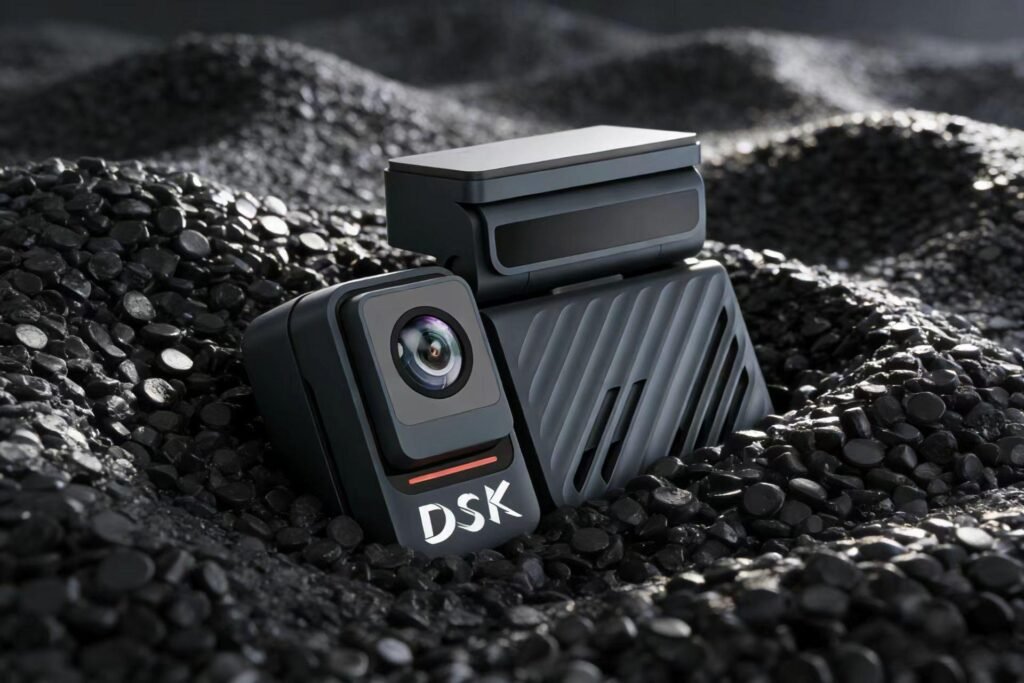
For DANSKER, choosing high-toughness engineering plastics is an investment in reliability. It ensures that when a driver in Northern Europe or North America hits the road, their device is protected by the same level of material science found in their vehicle’s dashboard and safety systems.