By [Matthew/DANSKER Team], Senior Marketing & Engineering Specialist
In the rapidly evolving landscape of automotive telematics, the “all-in-one” design philosophy often succumbs to the harsh realities of the vehicle’s cabin environment. At DANSKER, our engineering ethos is driven by one metric: Operational Reliability. While internal GPS solutions offer a sleek profile for consumer gadgets, the professional markets of North America and Europe demand a system that can withstand thermal extremes and complex RF (Radio Frequency) interference. This blog explores why the external GPS module remains the architectural cornerstone for high-performance dash cams, ensuring that when a critical incident occurs, the data—not just the video—is indisputable.
1. The Engineering Logic: Signal Integrity and Thermal Management
From a hardware R&D perspective, a dash cam is a high-density “heat engine.” The Image Signal Processor (ISP) and the H.265 encoding process generate significant thermal energy.
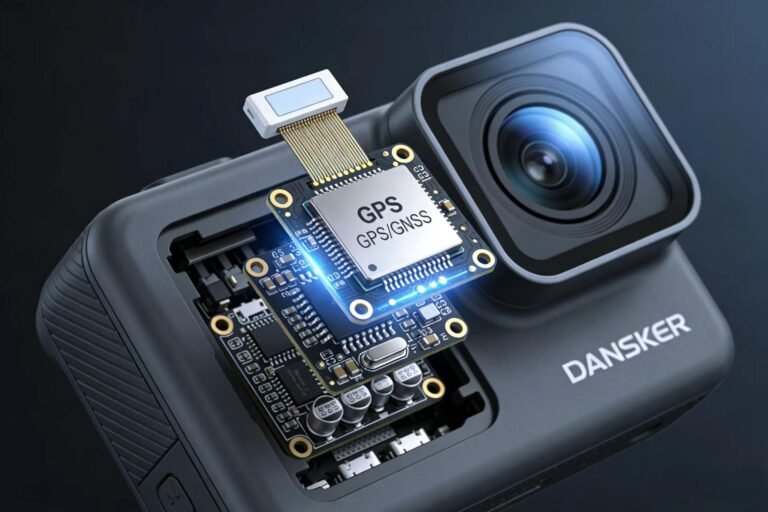
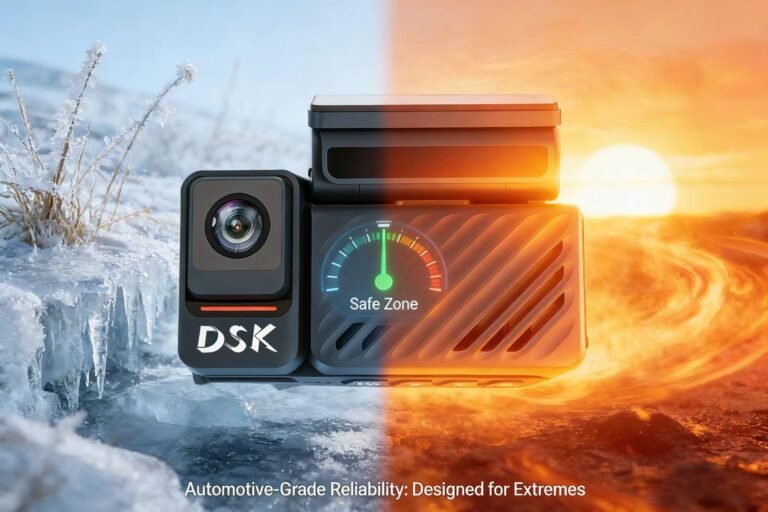
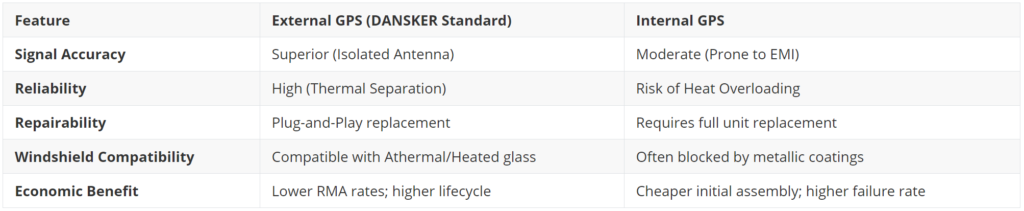
- Thermal Isolation: GPS chips are sensitive to heat; high temperatures can cause “frequency drift,” leading to slower Time to First Fix (TTFF) and reduced accuracy. By externalizing the GPS, we isolate the satellite receiver from the camera’s thermal core (>70°C(>158°F)).
- EMI/EMC Shielding: Dash cams house high-speed data buses and switching regulators that create Electromagnetic Interference (EMI). Placing the GPS antenna 15-30cm away from the main PCB significantly improves the Signal-to-Noise Ratio (SNR), ensuring stable tracking even in “urban canyons” like New York or London.
- Power Efficiency: External modules allow for independent power regulation, preventing voltage ripples from the camera’s CPU from interfering with the GPS’s delicate Low Noise Amplifier (LNA).
2. Market Adaptation: The “Athermal Windshield” Challenge
In Europe (particularly in German and Nordic brands like BMW, Volvo, and Audi), many vehicles are equipped with Athermal (IR-coated) or Heated Windshields.
- These windshields contain a metallic layer that acts as a Faraday cage, blocking GPS signals.
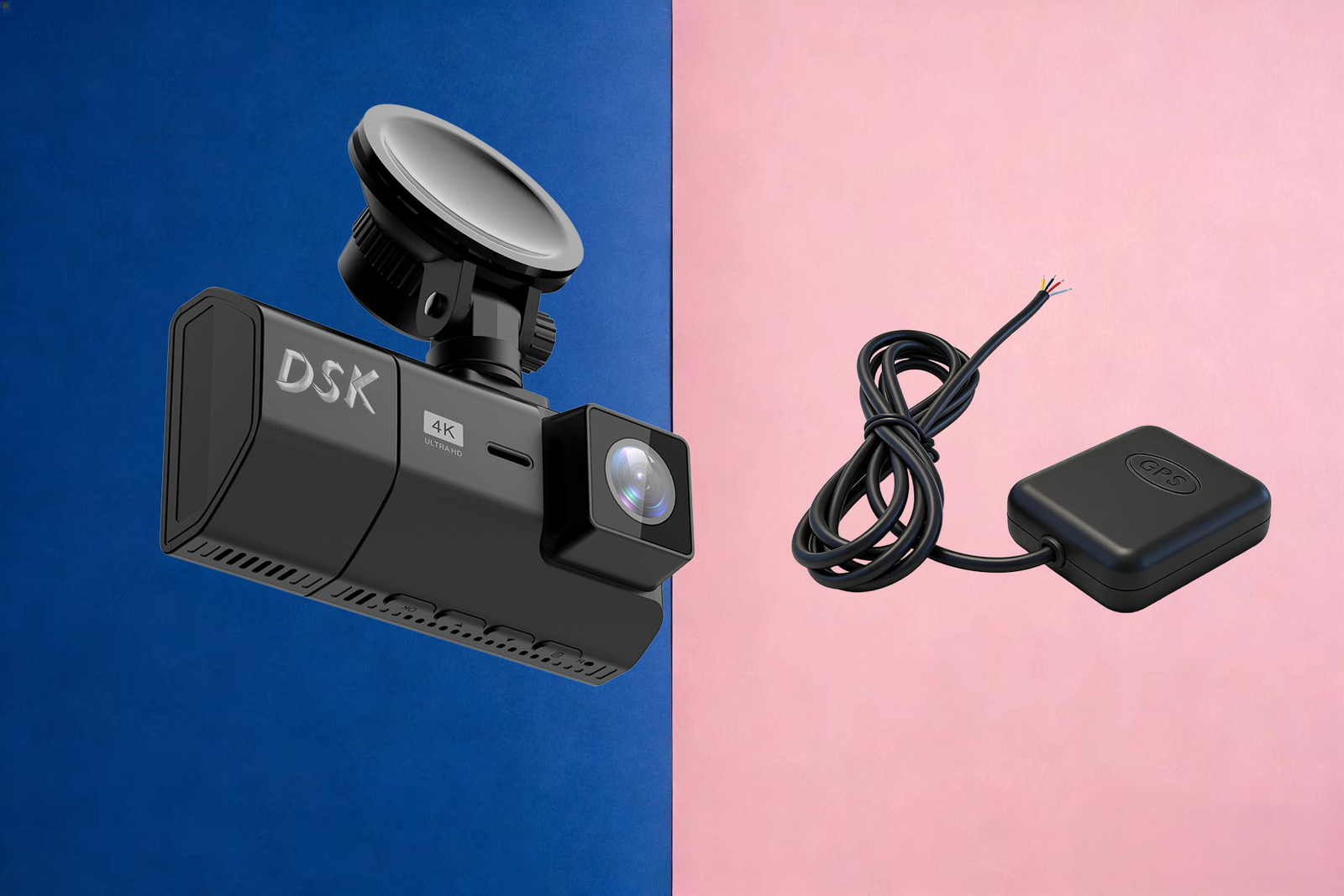
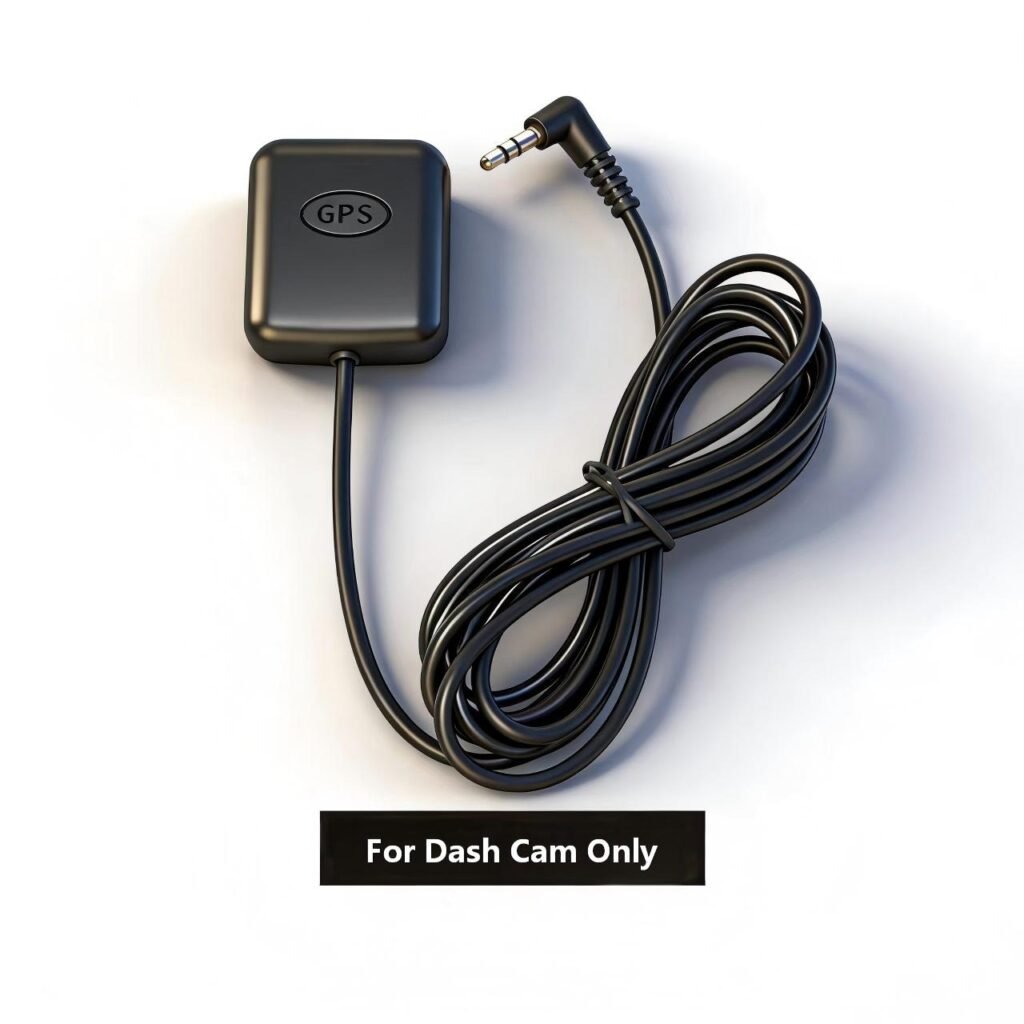
- An internal GPS dash cam mounted behind such glass will often fail to get a lock. An external module allows the user to position the receiver in the “clear zone” (usually the dotted area near the rearview mirror) while keeping the camera centered for the best field of view.
3. Professional Value: From Daily Commutes to Commercial Fleets
External GPS isn’t just a component; it’s a data-integrity tool.
- Legal Evidence: In US/UK courts, GPS metadata (speed and coordinates) must be synchronized perfectly with video frames. Our external modules use dedicated NMEA data streams to ensure zero latency between the vehicle’s physical location and the recorded footage.
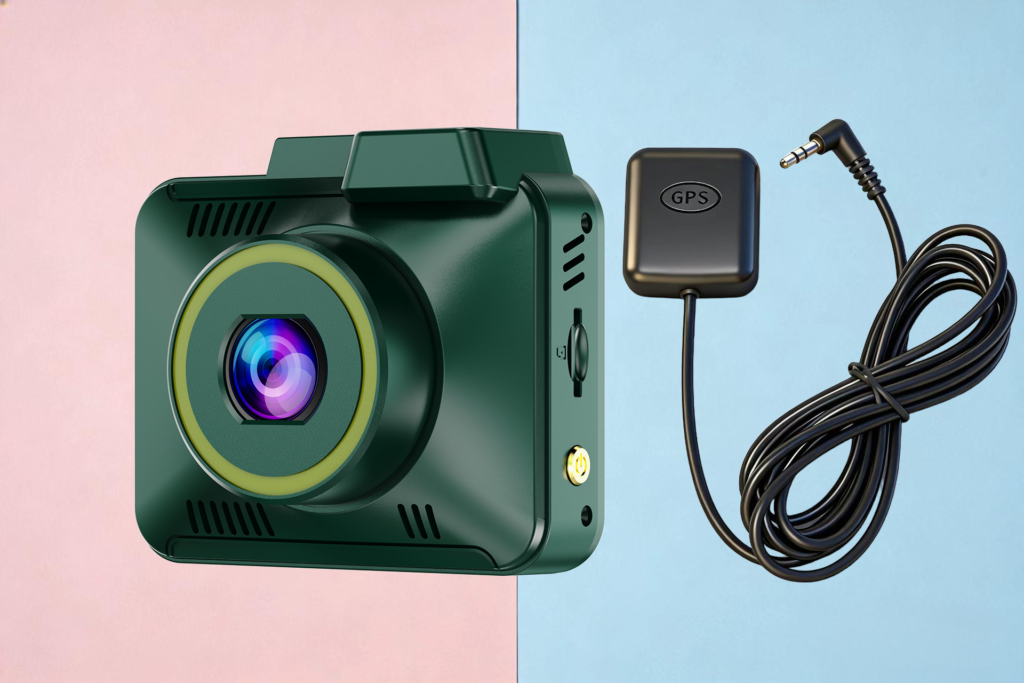
- Fleet Scalability: For Uber/Lyft drivers and heavy-duty trucking, the modularity is key. If a GPS antenna fails due to extreme vibration or sun exposure, you replace a $20 cable, not a $150 4K camera system. This drastically lowers the Total Cost of Ownership (TCO) and minimizes vehicle downtime.
4. Fleet Management Suitability: The Pro’s Choice
Does it apply to fleet management? Absolutely. For Commercial Fleets (Class 8 trucks) and Ride-Hailing (Uber/Bolt), external GPS is superior. Fleets often require the GPS module to be mounted higher or closer to the roofline to maintain a “Sky View” for 24/7 tracking. In heavy trucks with vertical windshields and massive engine bays, the RF environment is “dirty.” The flexibility of an external antenna ensures that the fleet manager always has an accurate log for IFTA fuel tax reporting and ELD compliance.
5. Future Outlook: Will Internal GPS Replace External?
While consumer-grade “mini” cams are moving toward internal GPS for aesthetics, the Professional and Aftermarket sectors in Europe and North America will favor external modules for the foreseeable future.
Engineer’s Closing Summary
Technical Verdict: From an R&D standpoint, the choice between internal and external GPS isn’t about aesthetics—it’s about Data Fidelity. In the high-stakes environments of Western markets, where insurance claims and fleet compliance rely on every meter of accuracy, the external module remains the only solution that solves the “Triple Threat” of automotive electronics: Heat, Interference, and Shielding. > At DANSKER, we don’t just record video; we engineer evidence. By choosing an external GPS architecture, we guarantee that our devices perform when the windshield gets hot, the city gets dense, and the data matters most.