By [Riley/DANSKER Team], Senior Marketing & Engineering Specialist
When we design dash cams for the demanding markets of North America and Europe, we aren’t just building cameras; we are building “black boxes” for vehicles.
One of the most misunderstood yet vital components in this ecosystem is the G-sensor. Here is a professional breakdown of how this technology works and why it remains a non-negotiable standard for our products.
In the world of automotive safety, data is only as good as its reliability. For a dash cam to be more than just a travel vlog tool, it must possess “situational awareness.” This is where the G-sensor (Gravity Sensor) comes into play.
1. What is a G-Sensor (Gravity Sensor)?
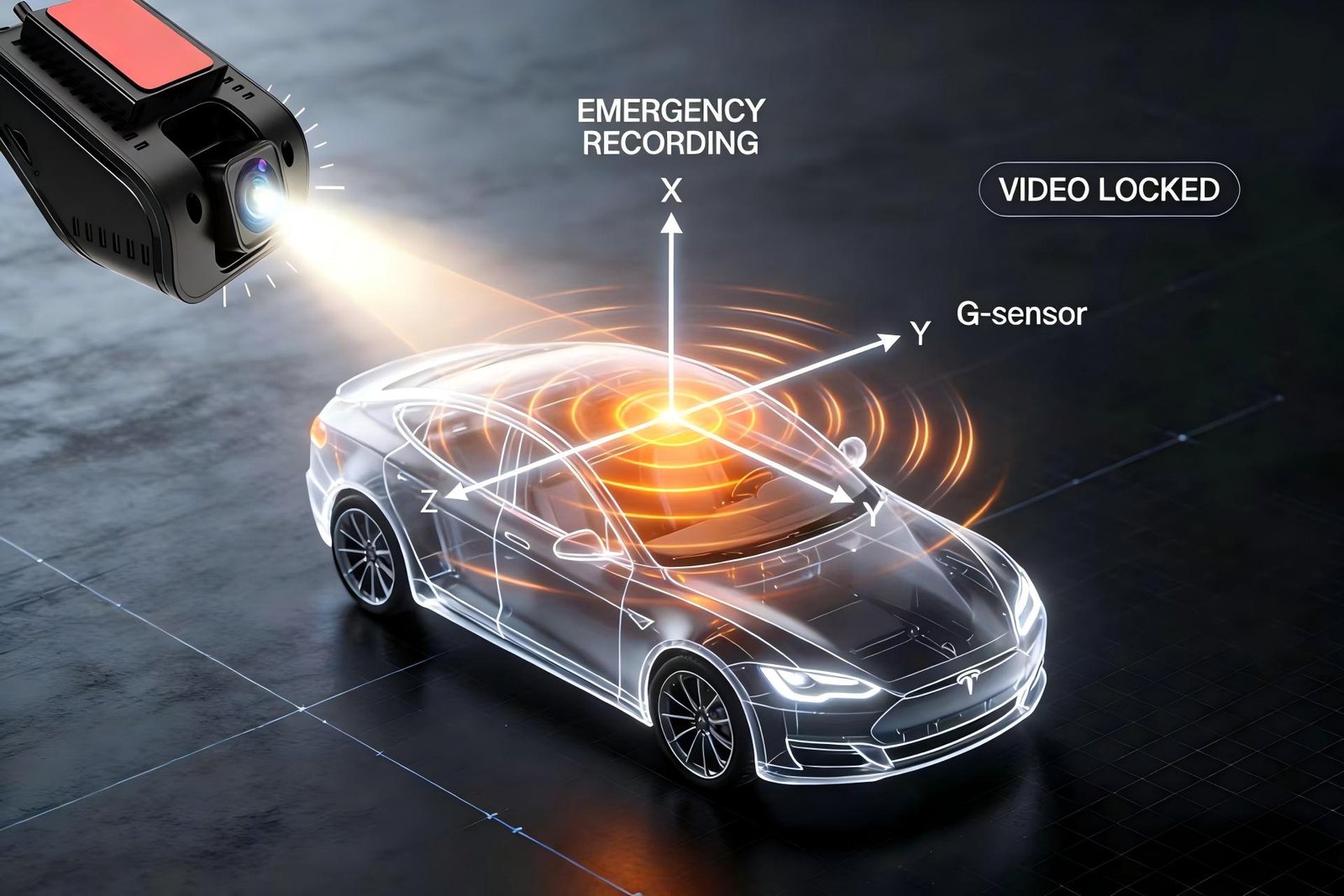
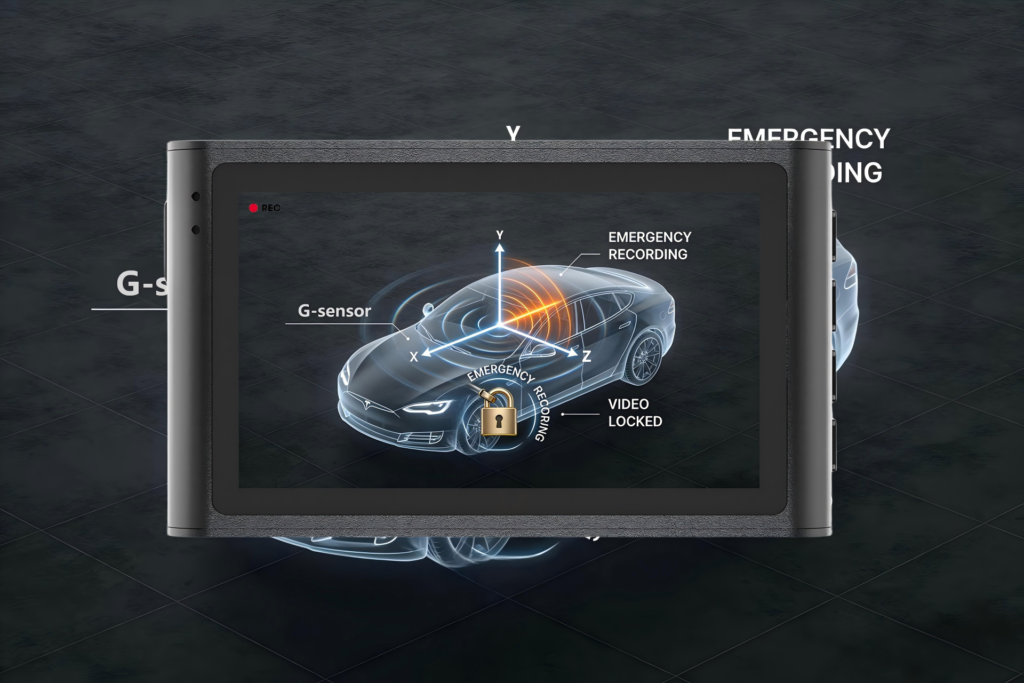
Technically known as a tri-axial accelerometer, a G-sensor is a Micro-Electro-Mechanical System (MEMS) that measures non-gravitational acceleration. In a dash cam, it tracks movement across three axes:
- X-axis: Longitudinal (acceleration and braking).
- Y-axis: Lateral (left and right turns or side impacts).
- Z-axis: Vertical (up and down motion, such as hitting a pothole).
By constantly monitoring these vectors, the software can detect a sudden change in force—measured in G-force—that deviates from normal driving patterns.
2. Engineering Requirements: PCBA and Software Integration
Implementing a G-sensor isn’t as simple as soldering a chip. It requires a sophisticated synergy between hardware and firmware:
- Hardware (PCBA): We utilize high-precision MEMS sensors connected via I2C or SPI protocols to the main System-on-Chip (SoC). The sensor must be perfectly leveled on the PCB to avoid “noise” or false triggers.
- Software Logic: The magic happens in the Interrupt-Driven Architecture. The software runs an algorithm that filters out regular vibrations (like engine hum) while remaining sensitive to sudden impulses. We implement Sensitivity Thresholds (Low, Medium, High) so users can calibrate the “Event Trigger” based on their vehicle’s suspension.
3. The Value of G-Sensor in Real-World Scenarios
The primary function of the G-sensor is Event-Based File Protection.
- Daily Driving: It ensures that if a collision occurs, the current video segment is moved to a “Locked” folder, preventing the Loop Recording feature from overwriting the most critical evidence.
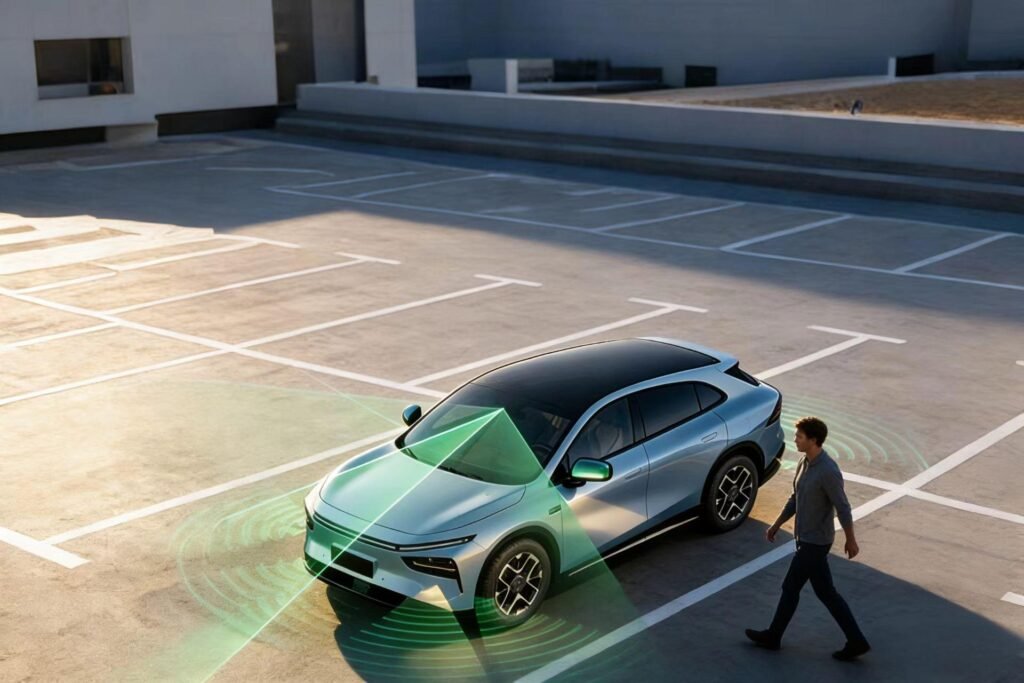
- Parking Surveillance: While the car is off, the G-sensor remains in a low-power “wake-up” state. If someone hits your parked car, the G-sensor triggers the dash cam to boot up and record, capturing the hit-and-run suspect.
- Accident Reconstruction: For insurance companies, the G-force data provides a “telemetric” look at the impact’s severity and direction, which is often more reliable than eyewitness testimony.
4. Is it Necessary for the Euro and North American Markets?
Absolutely. In regions like the UK, Germany, and the USA, insurance premiums are high, and “crash-for-cash” scams or complex liability disputes are common.
- Legal & Insurance Compliance: Most European insurers now prioritize or even mandate footage that is “incident-tagged.”
- High-Speed Environment: On the Autobahn or US Interstates, collisions happen at high velocities. Manual emergency recording is impossible for a driver in shock; the G-sensor ensures the data is saved automatically.
5. Why the G-Sensor is an Industry Standard
From an engineer’s perspective, the G-sensor is the bridge between “dumb” recording and “intelligent” monitoring. We consider it a “fail-safe.” A dash cam’s storage is finite. Without a G-sensor, the most important 30 seconds of a driver’s life could be deleted by a video of a boring traffic light five minutes later. By automating the Write-Protection logic, we remove human error from the equation, ensuring that when the worst happens, the evidence is preserved.
Engineer’s Technical Summary
From the Dev Desk: At its core, the G-sensor is the “instinct” of the dash cam. While the lens acts as the eyes, the G-sensor provides the physical feedback necessary to distinguish a routine commute from a critical incident. From a software architecture perspective, we treat G-sensor triggers as high-priority interrupts. This ensures that even if the processor is under heavy load—such as encoding 4K video—the command to “Lock & Protect” the current file is executed with near-zero latency. In the rugged environments of Northern Europe or the high-speed Interstates of the US, this deterministic behavior isn’t just a feature; it is the fundamental requirement for Data Integrity. We don’t just record video; we engineer the preservation of truth.