By [Riley/DANSKER Team], Senior Marketing & Engineering Specialist
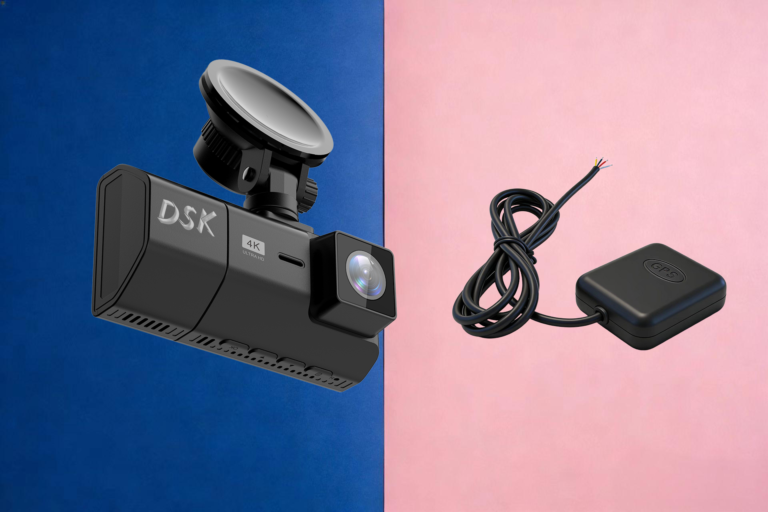
In the fast-paced world of automotive electronics, the dash cam has graduated from being a mere “silent witness” to becoming a high-precision data hub. For our clients across Europe and North America—from the high-speed Autobahns of Germany to the sprawling interstates of the US—the demand for integrated intelligence is at an all-time high. At DANSKER, we don’t just build cameras; we engineer peace of mind. One of the most pivotal shifts we’ve spearheaded is the transition from external, clunky GPS antennas to seamless, built-in GPS integration. But what does it take to tuck a satellite receiver into a high-performance video recorder without compromising signal or aesthetics?
As an R&D engineer, I’ve seen firsthand how this “invisible” technology defines the reliability of a device. Let’s “pop the hood” and look at the engineering logic, the market data, and the real-world value of integrated GPS.
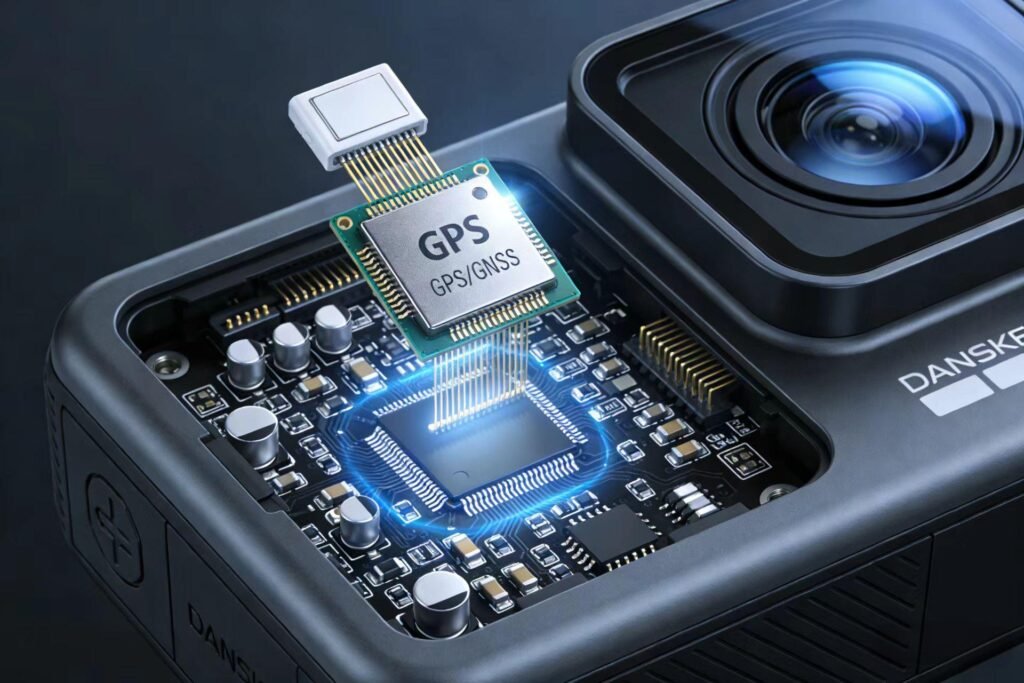
1. The Technical Anatomy: Why “Built-in” is an Engineering Feat
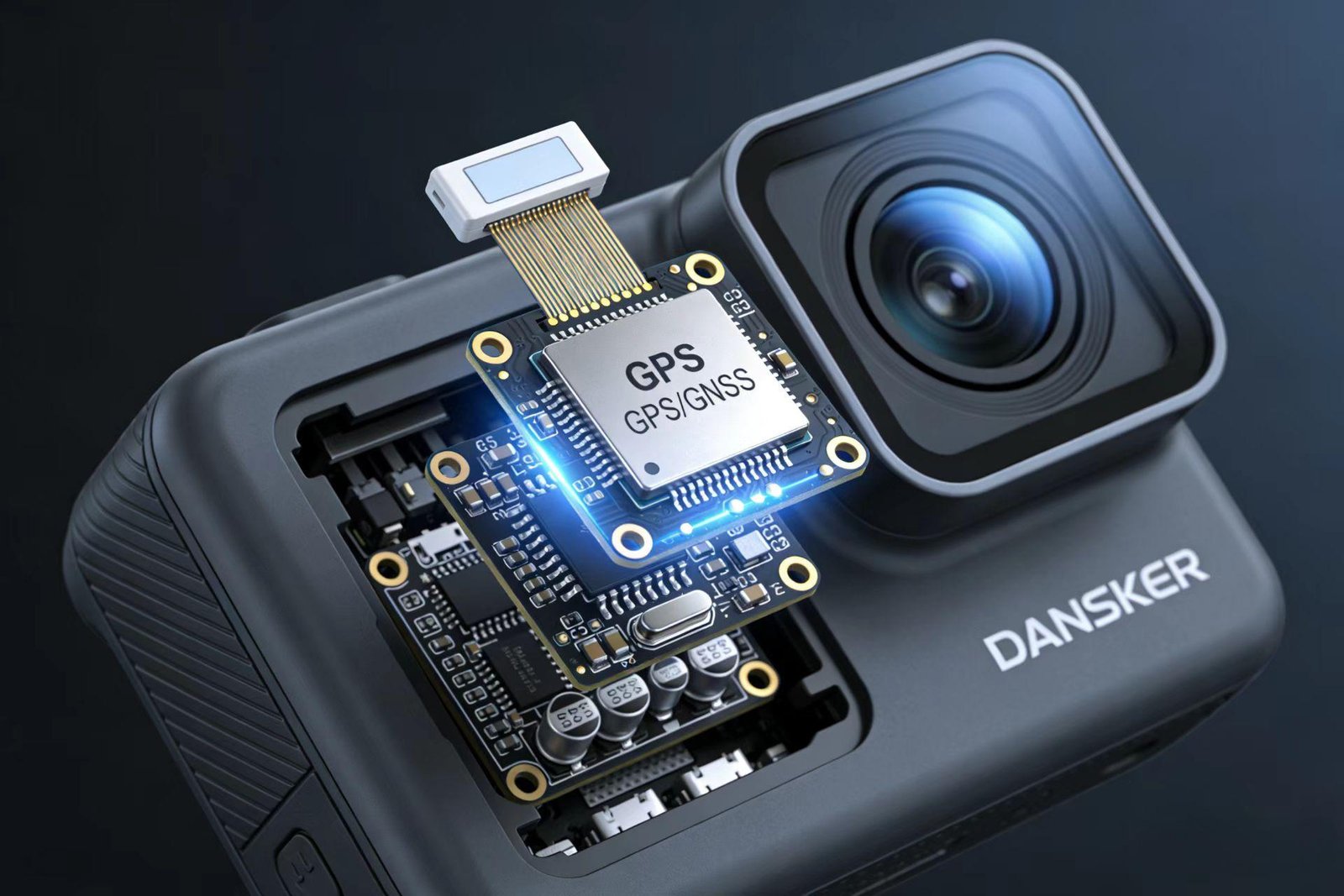
Integrating a GPS module directly onto the PCBA (Printed Circuit Board Assembly) involves more than just soldering a chip. It requires a holistic architectural approach:
- SoC & Data Synchronization: Modern Main Control Chips (SoCs) like those from Ambarella or Novatek must handle high-speed video encoding while simultaneously parsing NMEA data from the GPS via UART. Integration allows for microsecond-level synchronization between the video frame and the coordinate metadata.
- PCB Layout & EMI/EMC Shielding: This is the greatest challenge. A dash cam is a “noisy” environment with high-frequency signals from the DDR memory and CMOS sensor. Engineers must design specialized EMI shielding for the GPS ceramic patch antenna to prevent signal interference, ensuring a fast “Cold Start” TTFF (Time to First Fix).
- Thermal Management: GPS chips generate heat. In a compact enclosure, we use high-conductivity thermal pads to bridge the GPS module to the zinc alloy bracket or specialized vents, preventing thermal throttling during 4K recording.
- HMI & Sensor Fusion: Built-in GPS allows for seamless Sensor Fusion. By combining GPS data with the 6-axis IMU (G-sensor), we can calibrate ADAS (Advanced Driver Assistance Systems) features like Lane Departure Warnings with far greater accuracy than an external unit could provide.
2. Market Dynamics: The 2022–2025 EU/NA Surge
In the Western market, the adoption rate of integrated GPS in mid-to-high-end dash cams has climbed from approximately 45% in 2022 to an estimated 75% by late 2025.
Why this shift?
- Regulatory Pressure: The EU’s General Safety Regulation (GSR) and the move toward ISA (Intelligent Speed Assistance) have made consumers more conscious of speed-tracking accuracy.
- Insurance Incentives: In the UK and USA, many insurers now offer “Black Box” style discounts for drivers who can provide GPS-validated evidence of safe driving.
- The “Clean Cockpit” Aesthetic: European and American consumers prioritize interior minimalism. A dash cam with integrated GPS eliminates the “dangling wire” look.
3. Utility and Value: Beyond Latitude and Longitude
Integrated GPS provides a value proposition that transcends simple mapping:
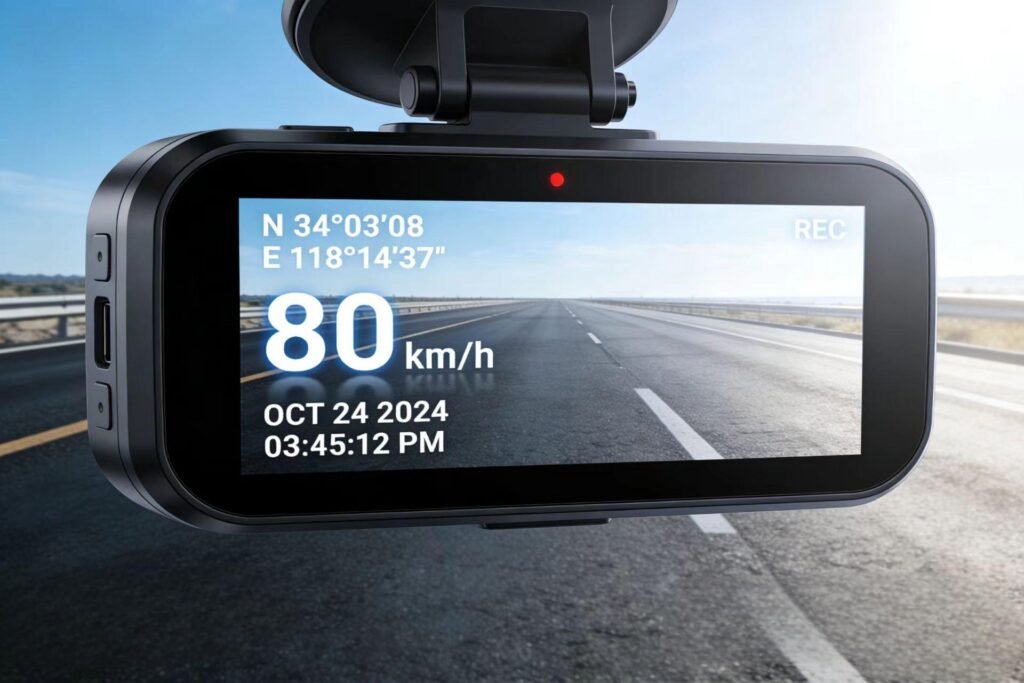
- Legal Admissibility: In the event of a collision, a video with embedded, encrypted GPS coordinates and a synchronized timestamp is significantly harder to dispute in court or with insurance adjusters.
- Fleet Telematics: For commercial operators, built-in GPS enables Geofencing and historical route playback without needing a secondary tracking device, reducing the total cost of ownership.
- Automated Time Sync: One of the biggest “silent” failures of dash cams is incorrect timestamps due to internal battery depletion. GPS automatically syncs the RTC (Real-Time Clock) to atomic clock precision the moment it connects to a satellite.
4. After-Sales and Fleet Management Logic
Does it increase after-sales costs? Paradoxically, no. While the BOM (Bill of Materials) is higher, the “System Reliability” increases. External GPS modules often suffer from connector wear, cable fatigue, or “user-error” disconnection. An integrated module is protected by the device’s housing, leading to a lower RMA (Return Merchandise Authorization) rate for connectivity issues.
For Fleet Management, this is non-negotiable. It allows managers to monitor driver behavior (harsh braking, speeding) via a centralized dashboard, making the dash cam a critical component of the company’s risk management strategy.
5. The Future: A Standardized Horizon
Integrated GPS is no longer a “feature”—it is becoming a baseline requirement. We are seeing this trend move from premium 4K models down to mainstream 1080P/2K devices.
The future lies in Dual-Band GNSS (L1+L5): This will provide sub-meter accuracy even in “urban canyons” like New York or London. While beneficial for civilian daily use, the real “efficiency gain” is in Commercial Fleet Management, where precise location data directly correlates to fuel savings, route optimization, and driver accountability.
🛠️ Engineer’s Perspective: The Final Verdict
“From a hardware architect’s desk, ‘Built-in GPS’ is more than a convenience feature—it is a commitment to system integrity. In the harsh environment of a vehicle cabin, where temperatures can swing 40°C in hours and vibration is constant, every external cable is a liability. By moving the GPS inside the chassis, we reduce the noise floor, simplify the user experience, and create a more robust forensic tool. For DANSKER, integration isn’t just about saving space; it’s about owning the accuracy of every pixel and every coordinate recorded.”
DANSKER: Precision Engineering for Every Mile, Certainty in Every Frame.