By: [William/Senior Engineering Lead at DANSKER]
As the automotive landscape in Europe and North America becomes increasingly complex, the demand for “absolute evidence” has never been higher. For a professional driver in London navigating narrow streets or a long-haul trucker on a rain-slicked Interstate 10 in the US, a standard camera is no longer enough. At DANSKER, we don’t just build cameras; we build visual truth engines. The centerpiece of our flagship professional line is the 170-degree ultra-wide bulging fisheye lens. This is not a mere aesthetic choice. It is a calculated engineering response to the chaotic reality of modern traffic.
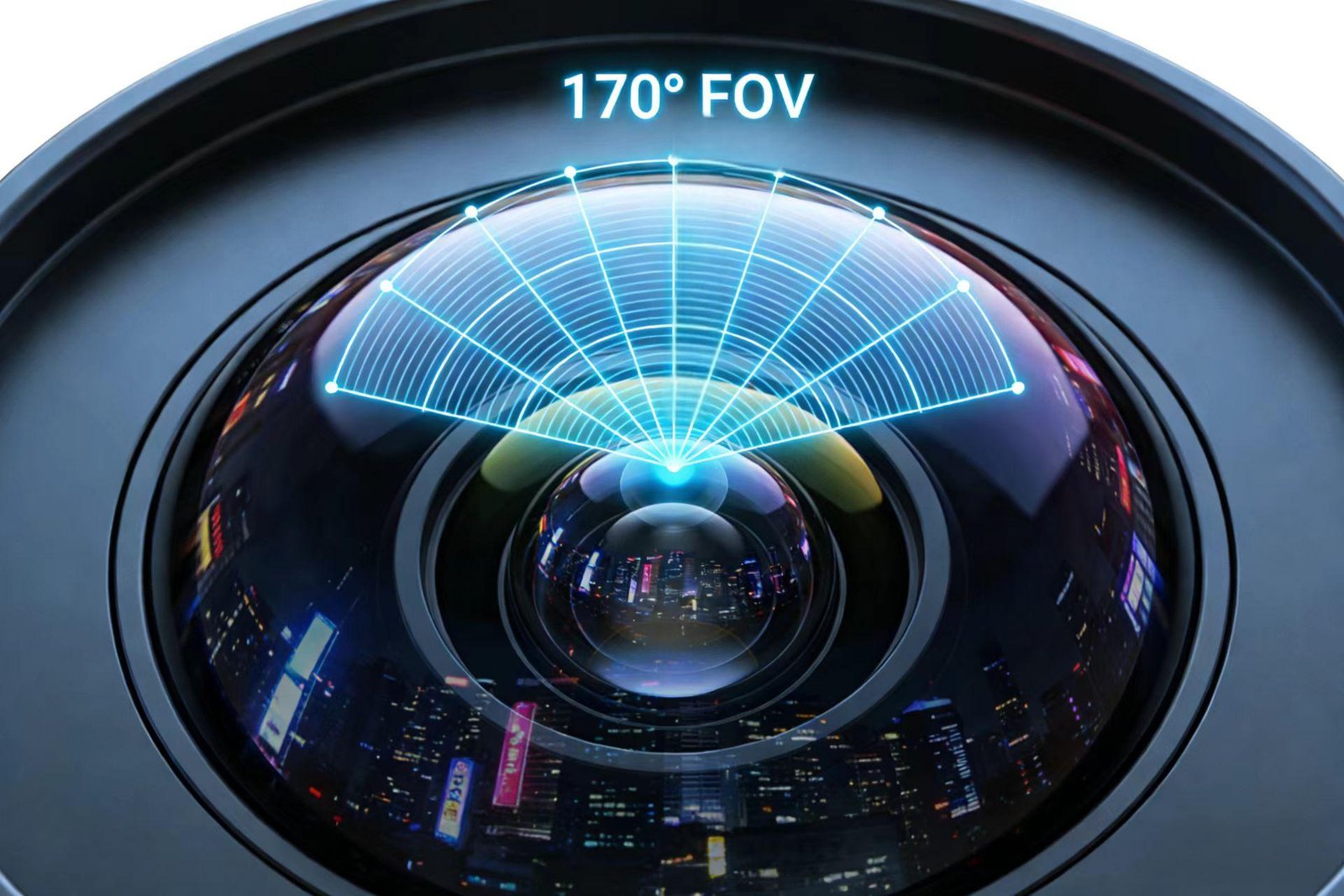
In the world of embedded systems and automotive electronics, “Field of View” (FOV) is the most critical metric for liability reduction. A typical consumer dash cam offers a 140-degree to 150-degree view. While this captures the road ahead, it leaves massive “blind zones” near the vehicle’s front pillars. In legal disputes across Germany, the UK, and the United States, the most contested accidents are side-swipes and “cut-in” collisions. A standard lens often misses the critical moment a vehicle enters your lane. By contrast, our 170-degree optics provide a panoramic sweep that mirrors the human peripheral vision, capturing everything from fender to fender.
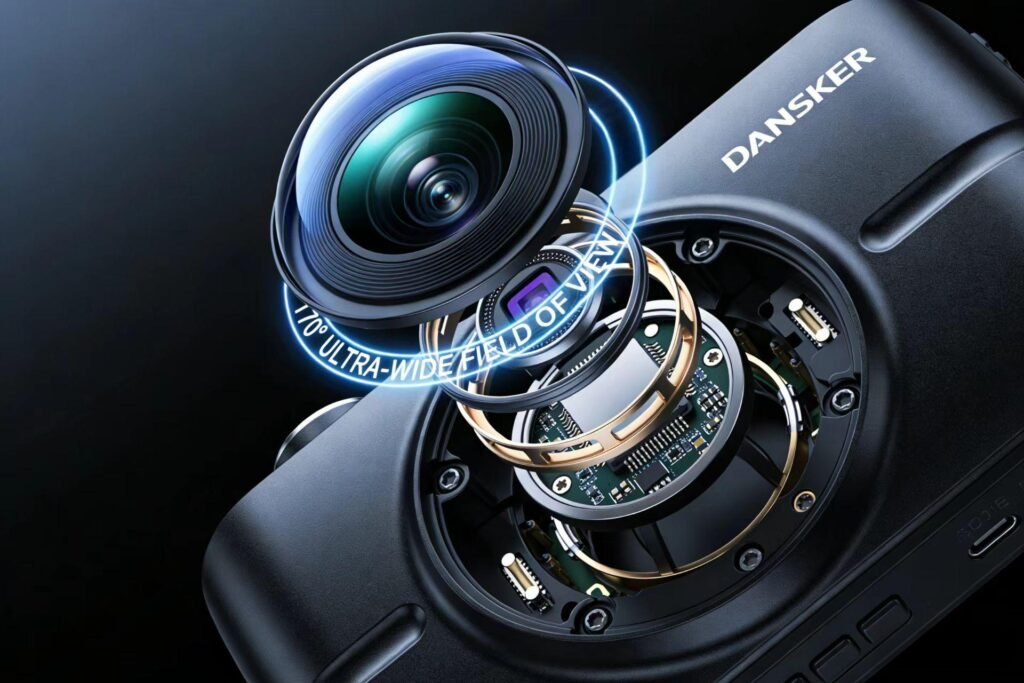
However, moving to a 170-degree fisheye architecture presents a massive technical challenge. Because the lens is “bulging” and convex, it gathers light from an almost hemispherical area. This creates an enormous amount of data and significant optical distortion. As engineers, we must balance the physical laws of light with the digital requirements of high-speed processing. This involves a deep integration of specialized hardware—such as 6-layer “A-grade” glass and sapphire coatings—with advanced software algorithms like Lens Distortion Correction (LDC) and High Dynamic Range (HDR) processing.
For fleet managers in the Western market, the stakes are high. Compliance with GDPR in Europe and FMCSA regulations in the US requires a device that is both powerful and discreet. You need a camera that can survive the freezing winters of Scandinavia and the blistering heat of a Texas summer without losing focus or failing. In this deep dive, we will explore the professional engineering secrets behind these lenses. We will look at how we tune the Image Signal Processor (ISP) to handle the low-angle sun of a British winter, and why our software recalibrates the ADAS (Advanced Driver Assistance Systems) to ensure that “lane departure” warnings remain accurate despite the ultra-wide stretch. This is the intersection of high-end optics and elite embedded engineering.
1. The Engineering Logic of the 170° Panoramic View
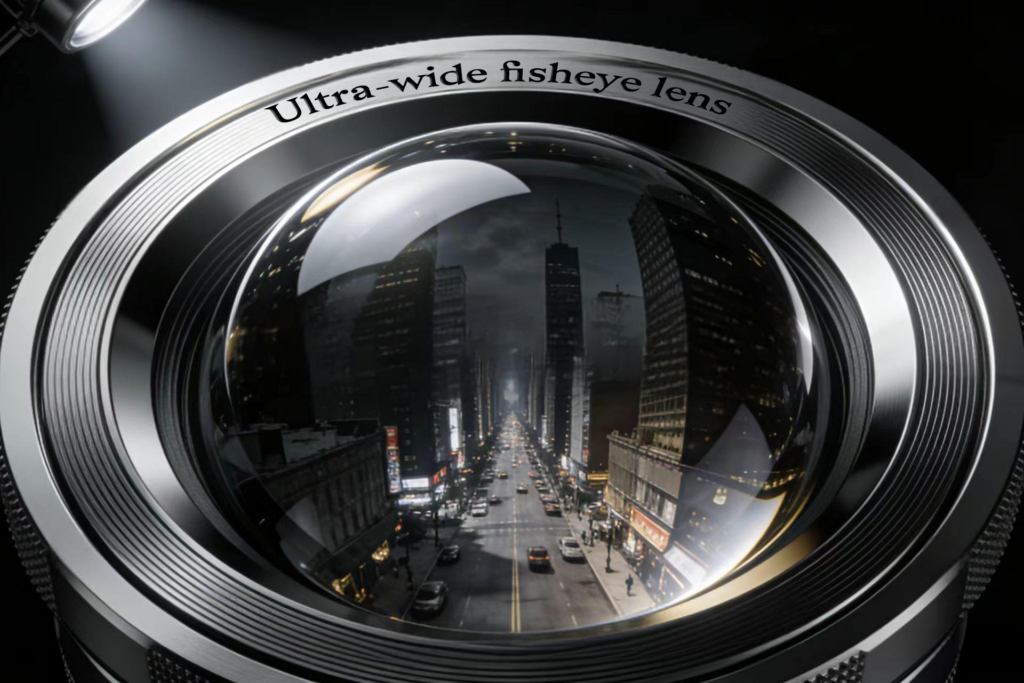
From a professional engineering perspective, a 170° lens provides what we call Total Situational Awareness. Standard lenses (around 140°) often miss the “A-pillar” zones of a vehicle. A 170° fisheye lens uses a short focal length—typically f < 2mm—to map a hemispherical field of view onto a flat image sensor.
This ultra-wide angle is critical because most urban collisions occur at intersections or during lane changes. By capturing 170 degrees, the camera records not just the car in front, but the cyclist in the blind spot and the vehicle entering the periphery. We use a non-rectilinear projection (often equisolid angle) to compress a massive amount of spatial data into the frame. This ensures that the “optical flow” captures every movement from fender to fender, providing a true panoramic record that serves as indisputable evidence in legal disputes.
2. Hardware Integration: Beyond the Glass
Integrating a bulging 170° lens requires a sophisticated hardware ecosystem. We must address several critical factors:
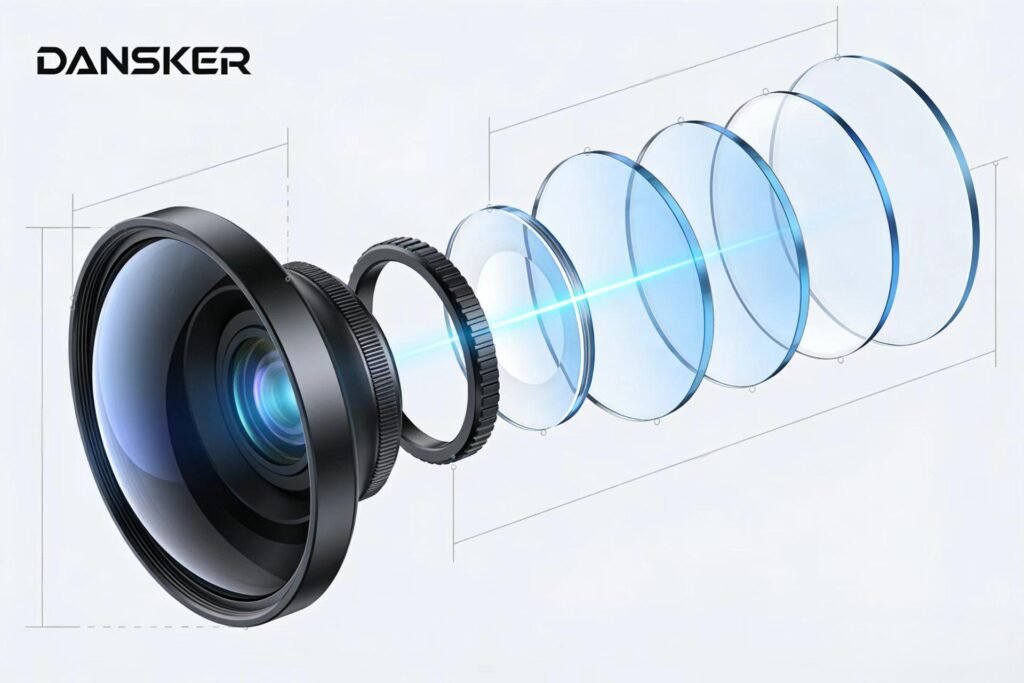
- Image Circle Matching: The lens’s “Image Circle” must perfectly cover the CMOS sensor’s active area. If the circle is too small, you get heavy vignetting; if it’s too large, you lose light efficiency.
- Structural Integrity & Vibration: Because the lens elements are heavy and protrude, we use reinforced lens mounts. We apply automotive-grade adhesives to ensure the lens does not shift under high-frequency engine vibrations (Grms values).
- Optical Coating (Anti-Glare): The convex shape is a magnet for stray light. We apply Multi-Layer Broadband Anti-Reflection (AR) coatings to minimize ghosting and “purple fringing” caused by the low sun angles common in Northern Europe.
- Durability: Since the lens is exposed, we use 6G (six-layer glass) construction with an outer layer of Hardened Sapphire Coating to prevent scratches from dust or cleaning cloths.
3. Software Excellence: Taming the Distortion
Hardware captures the light, but software defines the quality. A 170° lens produces a “barrel” effect that looks like a bubble. Our software stack manages this through four pillars:
- LDC (Lens Distortion Correction): This is our core math engine. We use hardware-accelerated algorithms to “warp” the pixels back to a natural view. This prevents the “curved horizon” look while maintaining detail at the edges.
- ISP (Image Signal Processor) Tuning: Wide lenses capture a massive range of light (from a dark dashboard to a bright sky). We fine-tune the Dynamic Range (WDR/HDR) and Lateral Chromatic Aberration correction. We ensure the edges of the image are as sharp as the center.
- ADAS Recalibration: Advanced Driver Assistance Systems (like Lane Departure Warning) rely on distance math. A 170° lens changes the perspective geometry. We must rewrite the Camera Calibration Matrices (K and R matrices) so the software accurately calculates the “Time to Collision” based on the wide-angle stretch.
- Bitrate Management: A wider view means more moving details in every frame. We increase the H.265 (HEVC) encoding bitrate by 20-30% compared to standard cameras. This prevents “pixelation” in complex scenes like driving through a forest.
4. Regional Specifics for Europe and North America
- Compliance: In Germany (GDPR) and the UK, we implement Automatic Loop Recording to ensure data is not stored longer than necessary.
- Privacy: Our software supports “Privacy Masking” to blur faces or plates if required by local regulations, while still keeping the 170° context.
- User Experience: For US drivers on wide highways, the 170° view is vital for capturing multi-lane traffic flow.
- Fleet Management: Integration with telematics allows US/EU fleet managers to see the “full cabin” or “full road” context via a single stream.
5. The Fleet Manager’s Perspective: Pros and Cons
The Advantages:
- Reduced Liability: You capture “side-swipe” accidents that standard cameras miss. This saves thousands in insurance premiums.
- Driver Coaching: The wide angle allows you to see the driver’s environment better, providing context for why a sudden brake occurred.
- One Camera, More Coverage: You can often replace a two-camera setup with one well-placed 170° unit, reducing hardware costs.
- Evidence Quality: In the UK or US, “Full Context” is king in court. Seeing the traffic light color and the side-on impact simultaneously is a game-changer.
The Drawback:
- Distance Perception: The “objects in mirror are closer than they appear” rule applies here. Because the lens compresses so much space, a car that looks 10 meters away might actually be 5 meters away. This requires driver training to interpret the footage correctly.
Core Engineering Takeaways & Market Value Analysis
| Feature (Core Takeaway) | Technical Implementation | Strategic Benefit |
| 170° Ultra-Wide Coverage | Utilizes short focal length (f < 2mm) to eliminate blind spots near vehicle A-pillars. | Total Awareness: Captures side-impacts and “cut-in” accidents at intersections. |
| 6G Glass + Sapphire Coating | Six-layer optical glass with a high-Mohs hardness outer protective layer. | Physical Durability: Resists scratches from road debris and maintains clarity in harsh climates. |
| LDC (Lens Distortion Correction) | Hardware-accelerated algorithms “unwarp” pixels to fix barrel distortion. | Visual Accuracy: Provides natural, non-distorted video that is easier to use as legal evidence. |
| High Bitrate H.265 Encoding | Increases data throughput by 30% to handle the high information density of wide views. | Detail Retention: Prevents pixelation in complex scenes, ensuring license plates stay sharp. |
| Regional Privacy Compliance | Firmware-level integration of GDPR-ready loop recording and encryption. | Risk Mitigation: Ensures fleet operators meet strict EU and UK data protection standards. |
| Maximum Fleet ROI | Comprehensive panoramic evidence reduces “at-fault” insurance payouts. | Cost Efficiency: Lower insurance premiums and faster claim settlements for professional fleets. |
Conclusion: The Strategic Value of 170° Optics in Modern Fleet Management
The transition from standard lenses to 170° professional fisheye optics represents a fundamental shift in how we approach automotive safety and data integrity. From an engineering standpoint, these lenses are not just wider; they are smarter. By integrating high-end hardware like 6G sapphire-coated glass with sophisticated LDC algorithms, we bridge the gap between raw optical data and actionable evidence. For a company like DANSKER, serving the high-stakes markets of North America and Europe, this technology is the foundation of a reliable safety ecosystem.
For fleet managers, the importance of this technology cannot be overstated. In the fleet industry, “context is king.” A standard 140° camera might show you that a crash happened, but a 170° lens shows you why it happened. It captures the car that swerved into your lane from a blind spot or the pedestrian who stepped off a curb before the driver could react. This panoramic visibility is the ultimate tool for liability protection. In many “he-said-she-said” legal disputes, having footage of the peripheral environment can save a company hundreds of thousands of dollars in insurance payouts and legal fees.
Furthermore, these lenses are a vital tool for driver coaching. Managers can review wide-angle footage to understand the full environmental pressures a driver faced during a “harsh braking” event. It moves the conversation from “why did you brake?” to “I see why you reacted that way.” This builds trust and improves safety standards across the fleet. While the initial investment in high-bitrate, LDC-equipped hardware is higher, the Return on Investment (ROI) is realized through lower insurance premiums, fewer contested claims, and enhanced driver retention. In the competitive landscape of Western logistics, 170° optics are no longer a luxury—they are a critical asset for operational excellence and legal security.