By [Riley/DANSKER Team], Senior Marketing & Engineering Specialist
Bridging the Gap Between Darkness and Clarity
As an automotive electronics engineer at DANSKER, I’ve spent the last decade navigating the complex intersection of optical physics and real-world road safety. In the high-stakes environments of North America and Europe—where litigation costs are high and regulatory standards like GDPR and Euro NCAP are stringent—a dash cam is no longer just a “recording device”; it is a digital witness.
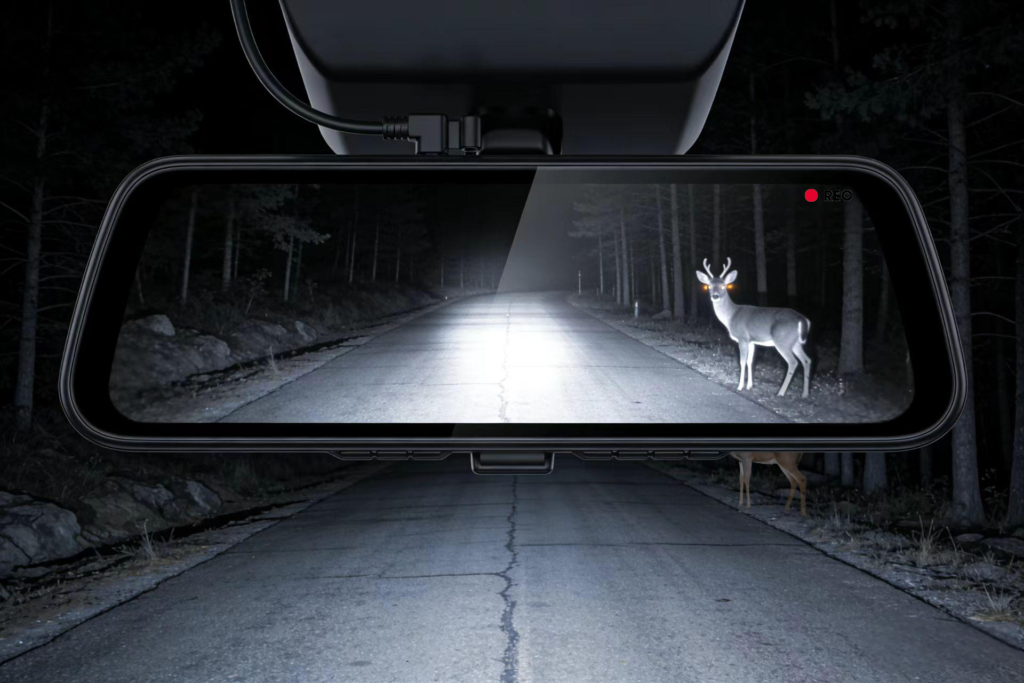
One of the most frequent questions I receive from our fleet partners in London or ride-share operators in New York is: “Why does IR night vision matter if we have streetlights?” The reality is that “low light” and “zero light” are two different engineering challenges. While standard cameras struggle with the high contrast of urban glare or the pitch-black cabins of long-haul trucks, Infrared (IR) Night Vision provides the consistent, high-fidelity data required for legal evidence and AI-driven safety.
In this deep dive, I will peel back the layers of our hardware and software stack to explain how we transform invisible photons into actionable intelligence, and why this technology is the “silent guardian” of modern automotive safety.
1. Defining IR Night Vision: The Synergy of Hardware and Software
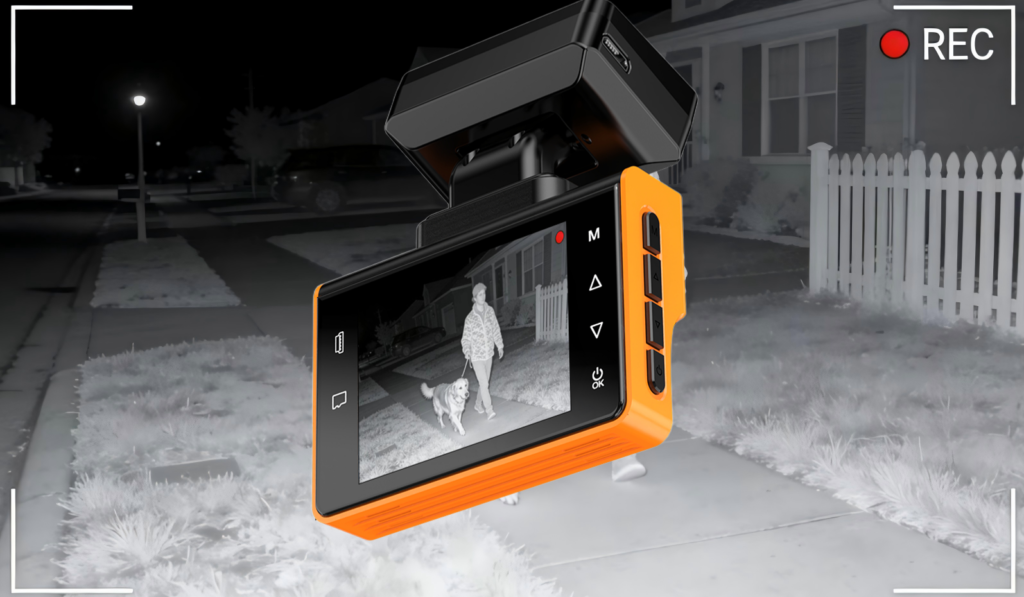
Infrared night vision is a multi-layered system designed to capture actionable data in environments where the human eye sees nothing (0 Lux).
- Hardware (The Foundation):
- Photosensitivity: We utilize high-sensitivity CMOS sensors (e.g., Sony STARVIS 2 series) with extended Near-Infrared (NIR) response.
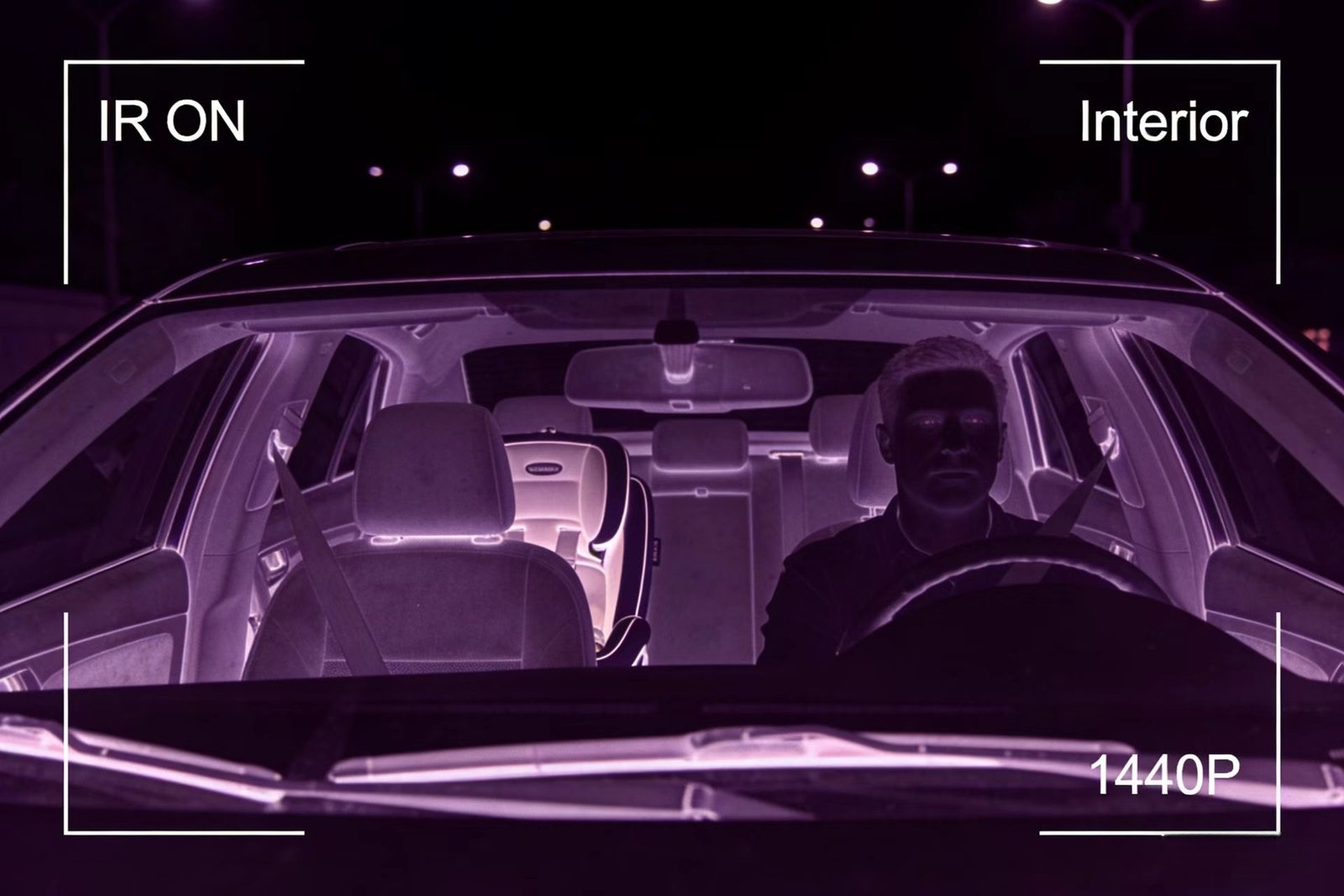
- Active Illumination: A cluster of 850nm or 940nm IR LEDs acts as an invisible “flashlight.” 940nm is preferred for interior “stealth” monitoring as it emits no visible red glow.
- Optical Path: We use IRCUT (Infrared Cut-off Filter) switchers. During the day, the filter blocks IR to prevent color distortion; at night, the motor removes the filter to allow IR photons to hit the sensor.
- Software (The Brain):
- ISP (Image Signal Processing): The software must detect light levels and trigger the Day/Night Switch via a hysteresis algorithm to prevent “hunting” (flickering between modes).
- Monochrome Optimization: In IR mode, the ISP bypasses the Bayer demosaicing for color and focuses on Luma (Y) channel enhancement to maximize contrast and edge definition.
2. Motherboard Requirements: The Cost of Clarity
Implementing true IR night vision places significant stress on the PCBA (Printed Circuit Board Assembly):
- Encoding & Storage: IR footage often contains more “salt-and-pepper” noise. Without high-efficiency H.265 (HEVC) encoding and sophisticated bitrate control (VBR), file sizes would explode or lose detail in the shadows.
- Thermal Management: IR LEDs generate substantial heat. Our motherboards utilize high-TG FR4 substrates and dedicated thermal vias to dissipate heat from the LED driver IC and the SoC to the aluminum casing.
- Automated Control: The motherboard must support real-time Auto-Exposure (AE) and Auto-Gain Control (AGC) tailored for IR. If the AGC is too high, the image is noisy; if too low, the IR distance is cut in half.
3. The Strategic Value: Beyond Just Recording
For our DANSKER clients in the US and Europe, IR night vision serves critical functions across various sectors:
- Rideshare (Uber/Lyft): Essential for interior security. It documents passenger behavior in total darkness, protecting the driver from false accusations or physical threats.
- Fleet Management: For long-haul trucking, IR-equipped driver-facing cameras monitor Drowsiness and Distraction (DMS), detecting eye-closure even when the cabin is pitch black.
- Parking Mode: IR allows the device to capture the face of a vandal or a hit-and-run driver in an unlit parking lot, providing evidence that standard cameras would miss.
4. Why We Need “Extreme” Math: Algorithms and Computing Power
High-quality IR video isn’t just about the light; it’s about the math.
- MCTF (Motion-Compensated Temporal Filtering): To remove noise without creating “ghosting,” we use 3D noise reduction (3DNR). This requires massive bandwidth as the SoC compares multiple frames in real-time.
- Motion Blur Suppression: By using AI-driven shutter speed adjustment, we minimize “motion blur” on license plates. This requires the SoC to perform millions of calculations per second to balance gain vs. exposure time.
- Dynamic White Balance (AWB): While IR is monochrome, “Color Night Vision” (low-light) requires a specialized AWB to prevent the orange hue of streetlights from washing out the scene.
5. The European & American Market Reality: Is it Necessary?
In DANSKER’s core markets, the answer is a resounding Yes.
- Cost-Benefit: While IR adds roughly 10-15% to the BOM (Bill of Materials), the reduction in insurance premiums for commercial fleets far outweighs the initial hardware cost.
- Regulatory Compliance: In the EU (GDPR), clear evidence is required for “legitimate interest” in court. Grainy, dark footage is often dismissed; IR provides the “beyond reasonable doubt” clarity required by German or UK courts.
6. The Engineer’s Outlook: The Future of Night Vision
We are moving toward AI-ISP and Multi-Spectral Fusion.
- Future Trend: I predict the “Black and White” IR era is ending. The next generation will use visible light + IR fusion, where IR provides the structural “skeleton” of the image and the sensor’s high sensitivity provides the “color skin,” resulting in full-color images in near-total darkness.
- Standardization: IR will soon be a mandatory “active safety” component, integrated into ADAS (Advanced Driver Assistance Systems) to help emergency braking systems “see” pedestrians at night.
Engineering Summary: The Silent Pulse of Safety
As we look toward the next generation of DANSKER products, Infrared Night Vision remains the silent pulse of our safety ecosystem. From an architectural standpoint, the challenge has shifted from “simply seeing in the dark” to “processing darkness with precision.” By integrating high-bandwidth ISP pipelines with thermal-resilient PCBA designs, we have moved beyond basic recording into the realm of Intelligent Optical Surveillance.
In the European and North American markets, where reliability is the only currency that matters, IR technology is the bridge between a “glitchy video” and “indisputable evidence.” As an engineer, my goal isn’t just to build a camera that works at noon, but to design a system that excels at 3:00 AM on a rain-slicked highway or in a pitch-black delivery van. We don’t just capture light; we master the absence of it.