By [Olivia/DANSKER Team], Senior Marketing & Engineering Specialist
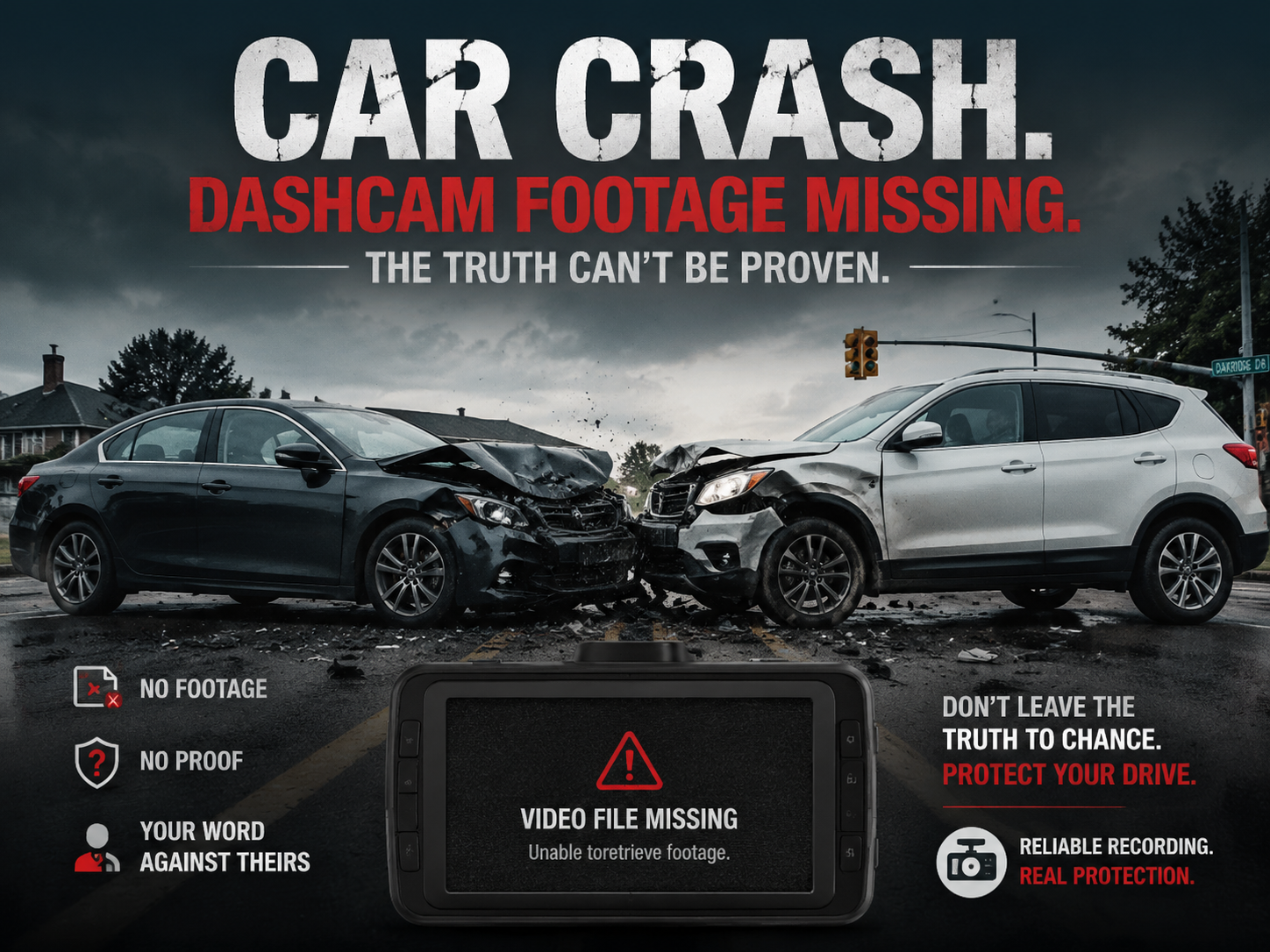
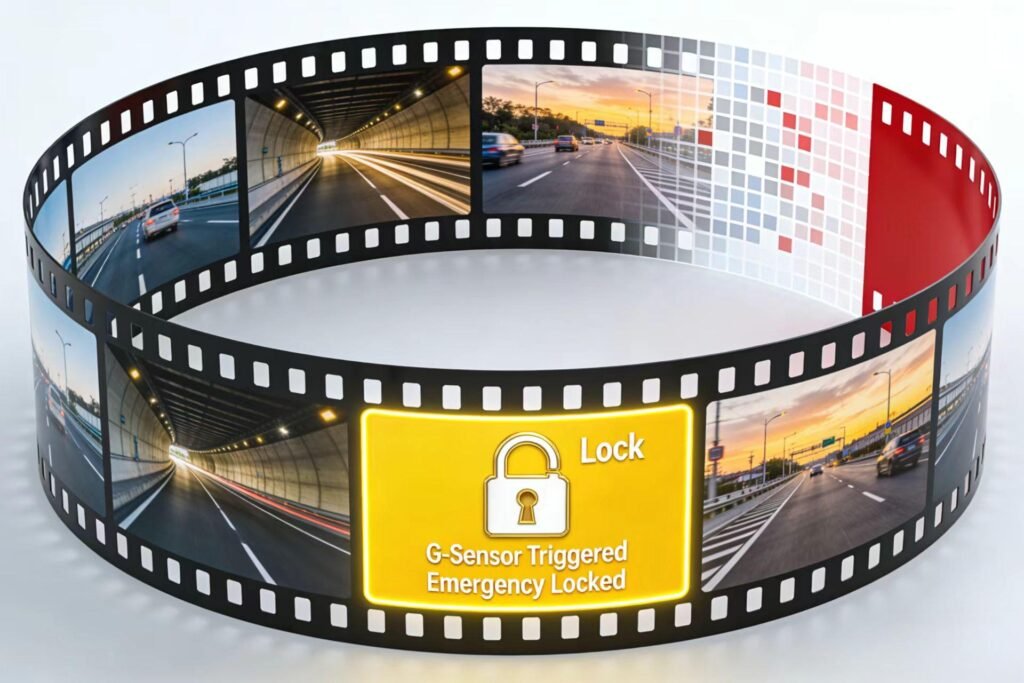
In the world of automotive electronics, a dash cam is more than just a camera; it is a silent witness. At DANSKER, our engineering philosophy for the Western market focuses on “Set and Forget” reliability. Drivers in the US, UK, and Europe operate in diverse conditions, from high-speed Autobahns to crowded London streets. They need a system that manages data autonomously but responds instantly to emergencies. This is where the synergy of Loop Recording and One-Key Locking becomes the backbone of our embedded design. As an engineer, I view these not as separate features, but as a unified fail-safe system.
1. What is Loop Recording?
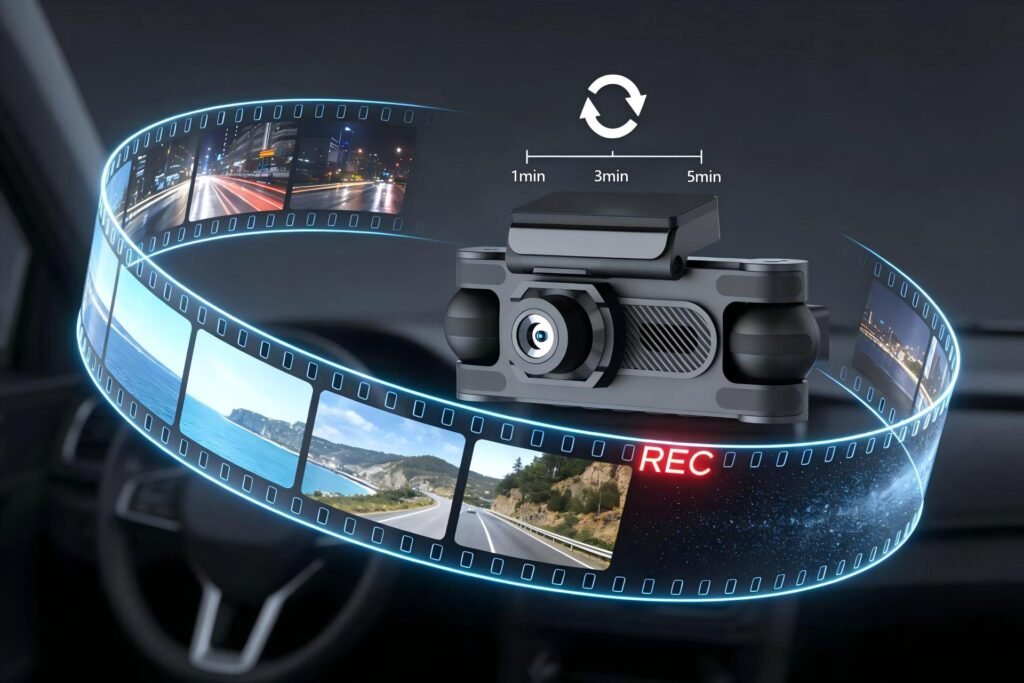
Loop recording is a storage management strategy. The system divides the continuous video stream into small files, usually 1, 3, or 5 minutes long. When the MicroSD card reaches its full capacity, the circular buffer logic kicks in. The DVR (Digital Video Recorder) automatically deletes the oldest unprotected file to make room for the newest footage. This ensures the device never stops recording due to a “Memory Full” error.
2. The Synergy: Why Combine Loop with One-Key Locking?
From an engineering perspective, loop recording is automated but “blind.” It treats every second of footage with equal importance.
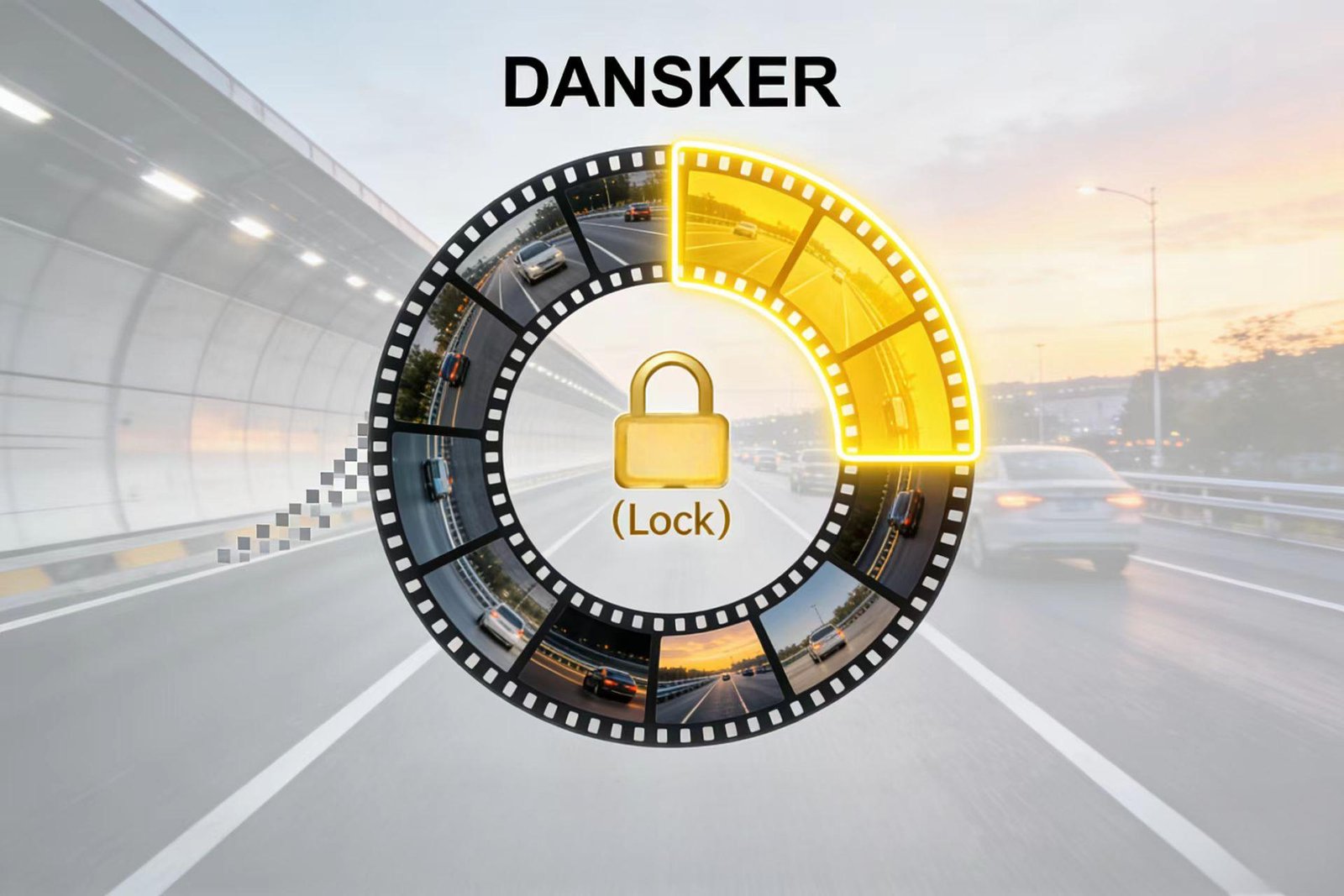
- Automation: One-key locking tells the software which data is “high-value.”
- Utility: It prevents critical evidence from being overwritten by the loop.
- Real-time Response: In high-stress situations (like a road rage incident), a driver cannot navigate menus. A physical or dedicated button provides immediate interaction.
- Safety: It ensures that even if the driver continues to burn miles after an incident, the evidence remains intact in a protected partition.
3. Software Engineering: Precision in Execution
To make this work, we focus on several technical hurdles:
- Seamless Gapless Recording: We use a double-buffering technique. While one file is closing, the next is already writing to the cache. This ensures 0 ms of frame loss during the transition.
- The “X+Y” Logic: When you press the lock button at time T, the system doesn’t just lock the current file. Our logic locks [T – 10s] and [T + 20s]. This ensures the “cause” and “result” of an event are both captured, even if they span across two different loop files.
- Write Protection: Locked files are moved to a “RO” (Read-Only) folder or marked with a “hidden” attribute in the File Allocation Table (FAT32/exFAT) to bypass the deletion thread.
4. Hardware Engineering: The Physical Foundation
Hardware must support the software’s demands:
- File System & Power Protection: We use Supercapacitors instead of Li-ion batteries. If power cuts during a crash, the capacitor provides enough energy to “flush” the remaining cache to the NAND flash.
- G-Sensor Calibration: The Accelerometer must be finely tuned. If it is too sensitive, every pothole locks a file and fills the card. If it is too dull, it misses a real collision.
- Haptic Feedback: The “One-Key” button must be easy to find by touch. We pair this with a high-intensity LED or an audio chime so the driver knows the file is successfully locked without looking away from the road.
5. Real-World Value in Western Markets
In the US and Europe, this combination is vital for several reasons:
- Insurance & Liability: In “no-fault” states or complex UK roundabouts, instant video evidence speeds up claims.
- Fleet Management: Logistics companies in Germany and Scandinavia use locked files to monitor driver safety and cargo integrity.
- Vandalism & Security: In urban areas, manual locking helps capture suspicious behavior while parked without filling the card with empty street footage.
6. Why This Duo is the Industry Standard
Loop recording and locking are standard because they solve the “Reliability vs. Capacity” paradox. You cannot have infinite storage, and you cannot afford to miss a crash. This architecture creates a self-sustaining system that requires zero maintenance from the user until an incident occurs. It is the perfect balance of “set and forget” automation and “user-defined” priority.
Conclusion
At DANSKER, we don’t just see these as “features” on a spec sheet; we see them as the critical bridge between raw data and legal evidence. By combining autonomous file management with high-priority manual overrides, we ensure that our hardware remains stable and our users remain protected. For any driver in the Western market, this dual-layer protection is the difference between an insurance headache and a closed case.