By: [Lucas/Senior R&D Engineer at DANSKER]
A dash cam sits in one of the harshest spots inside a vehicle. The windshield area faces freezing -30°C mornings in Nordic winters. That same area reaches 75°C to 85°C under direct sun in Southern European summers. Many consumer cameras can power on in these conditions, but powering on is not enough. Fleet operators and drivers need unbroken video evidence when an incident happens.
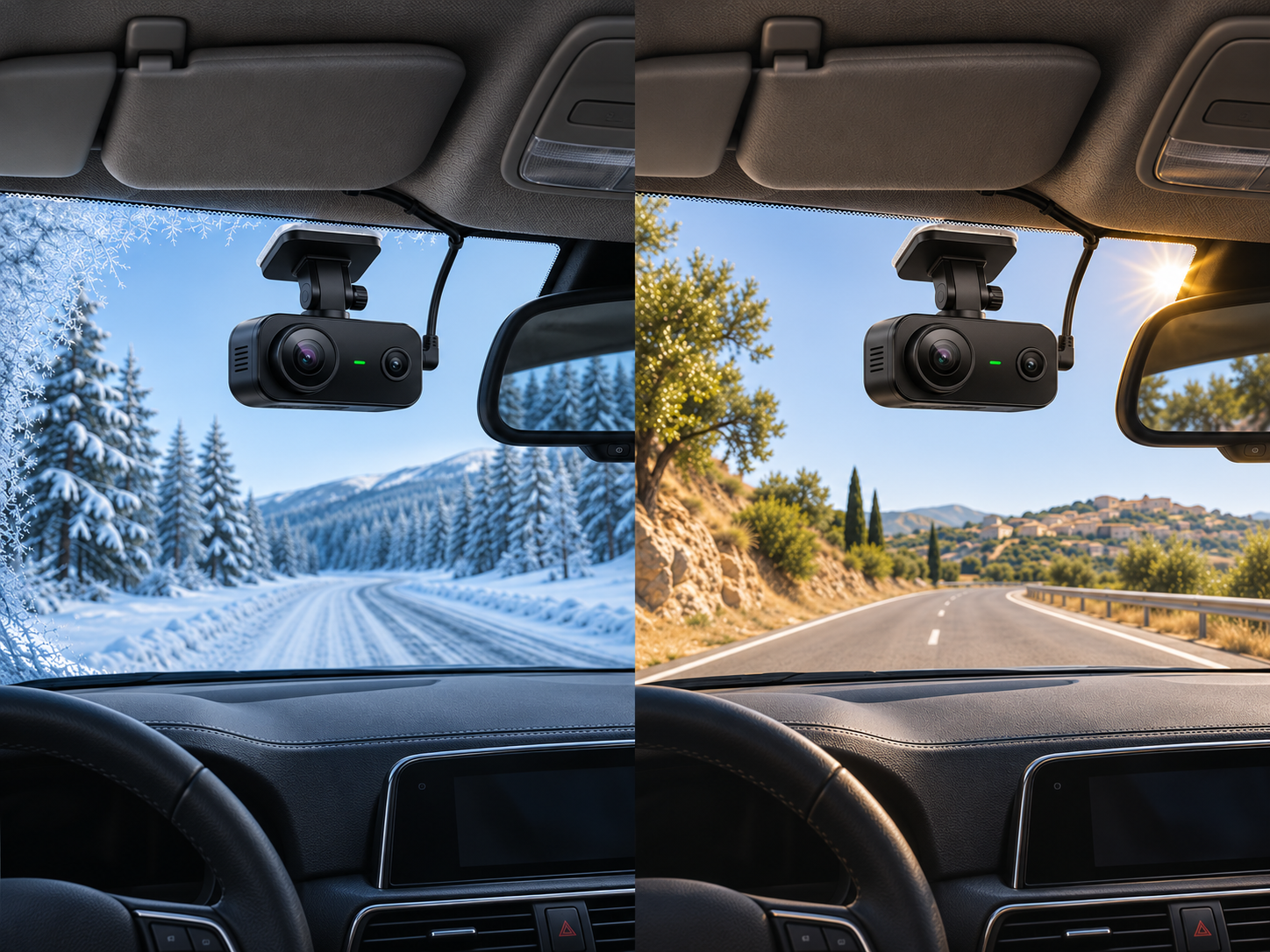
Running multi-channel recording makes this challenge even harder. Front 4K, interior, and rear cameras push the processor, memory, and storage to their limits at the same time. At DANSKER, our engineering team builds hardware to handle both extremes without dropping frames. Here are six core pillars that turn basic hardware into a reliable evidence system.
1. Wide-Temperature Component Selection and Power Stability
Standard consumer electronics fail quickly behind a car windshield. Engineers must choose automotive-grade (AEC-Q100) or industrial-grade parts rated from -40°C to +85°C or higher. This rule applies to the main SoC (System on Chip), DRAM, image sensors, and voltage regulators.
Power storage is the first weak link in extreme climates. Traditional lithium-ion batteries lose capacity below freezing, and they swell or fail above 60°C. DANSKER uses industrial supercapacitors instead. Supercapacitors work reliably from -40°C to +85°C, and they hold enough charge to save the final video file during a sudden power cut.
Storage media also faces heavy stress during multi-channel writes. Standard microSD cards slow down or corrupt under high heat. High-endurance pSLC NAND cards or industrial eMMC chips keep write speeds steady in harsh weather.
2. Structural and PCB Thermal Design for Multi-Channel Loads
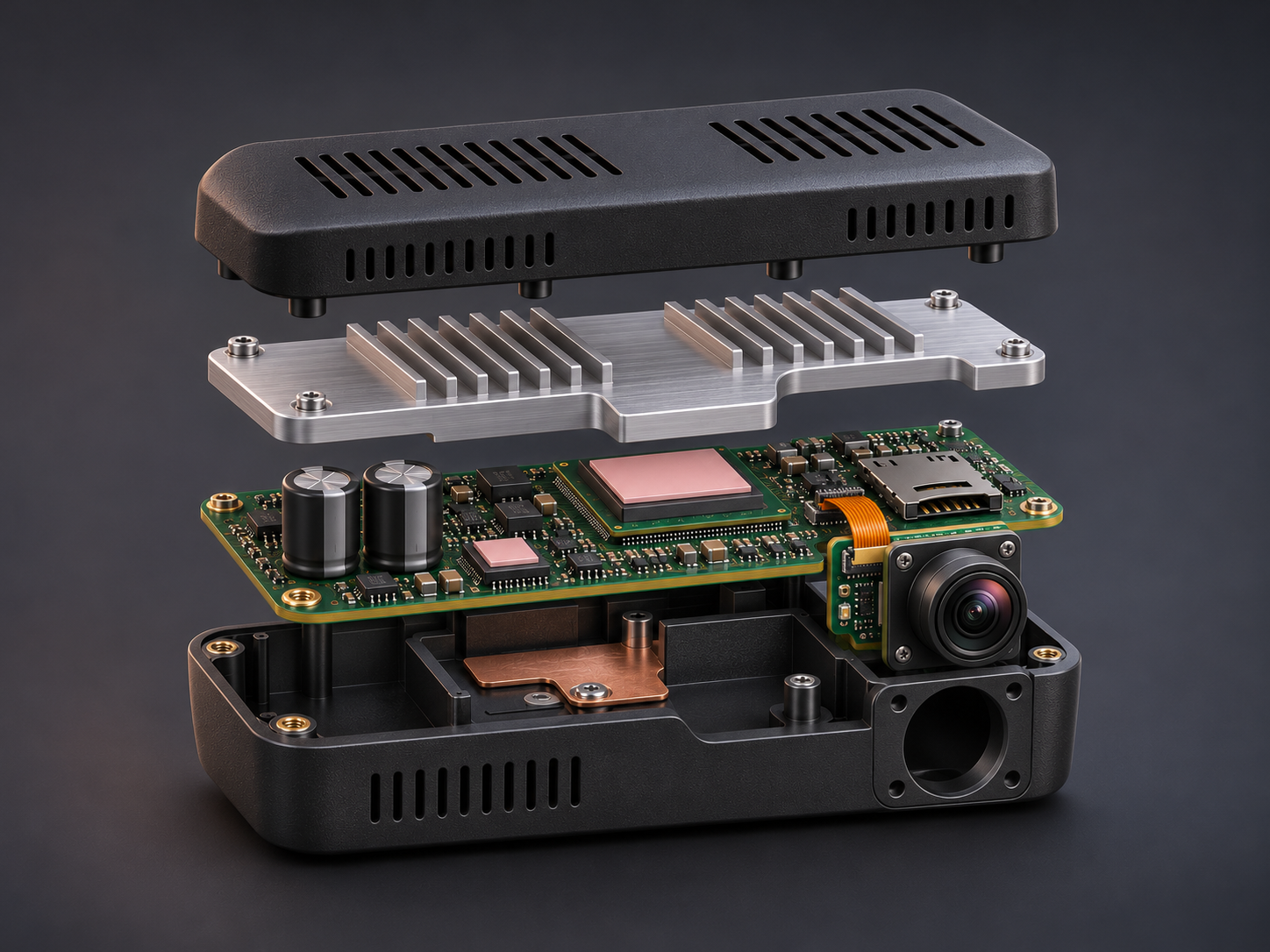
Multi-channel H.264 and H.265 video encoding generates a lot of heat inside a compact housing. If heat stays trapped inside, the SoC will overheat and shut down. Good thermal design starts at the PCB (Printed Circuit Board) level.
Engineers use multi-layer PCBs with thick copper planes and dense thermal vias to spread heat away from hot chips. High-conductivity thermal pads connect the SoC and PMIC (Power Management IC) directly to an internal aluminum heatsink or metal frame. This structure pulls heat away from sensitive components.
Case airflow also plays a big role. Top and bottom ventilation slots use natural convection so hot air rises and leaves the housing. Designers also place the CMOS image sensor away from the main processor. This layout stops heat from causing image noise or lens focus drift.
3. Stepped Thermal Protection Without Losing Video Evidence
Many low-cost dash cams handle heat in a crude way. They either freeze up or shut off completely the moment they get too warm. A sudden shutoff leaves the driver with no video proof.
Smart systems use built-in NTC thermistors and internal SoC die sensors to track heat in real time. Instead of a sudden shutdown, the firmware runs a stepped protection plan:
- Step 1: The system turns off the LCD screen and disables the Wi-Fi module to cut power draw.
- Step 2: The firmware reduces the frame rate or bitrate on secondary channels while keeping the main road view active.
- Step 3: The camera saves the active video file cleanly and enters safe thermal shutdown only if internal heat hits the critical hardware limit (around 80°C to 85°C).
This stepped approach keeps the camera recording through hot summer traffic.
4. Cold-Start Power Sequencing and Anti-Reboot Firmware
Nordic winters create a different set of hardware failures. A cold car battery suffers a sharp voltage drop when the starter motor cranks the engine. Vehicle voltage can dip below 6V for a short time, as defined in the ISO 16750-2 cold-crank standard. Poorly designed dash cams fall into endless boot loops during these voltage dips.
A wide-input DC-DC power design solves this issue. The PMIC monitors the incoming voltage, and it waits for stable power before waking the main processor. This clean power-on sequence prevents frozen boots on freezing mornings.
Firmware stability is just as important as hardware power control. A hardware watchdog timer (WDT) watches the recording threads at all times. If a camera channel freezes in sub-zero weather, the watchdog resets the stream fast without wiping earlier clips. The system also writes video in TS (Transport Stream) or fragmented MP4 format. Every second of video saves to storage right away, so sudden power cuts never ruin the file.
5. System-Level Validation Standards for Extreme Environments
Individual component specs do not guarantee a reliable final product. The full dash cam unit must pass strict automotive environmental tests before mass production.
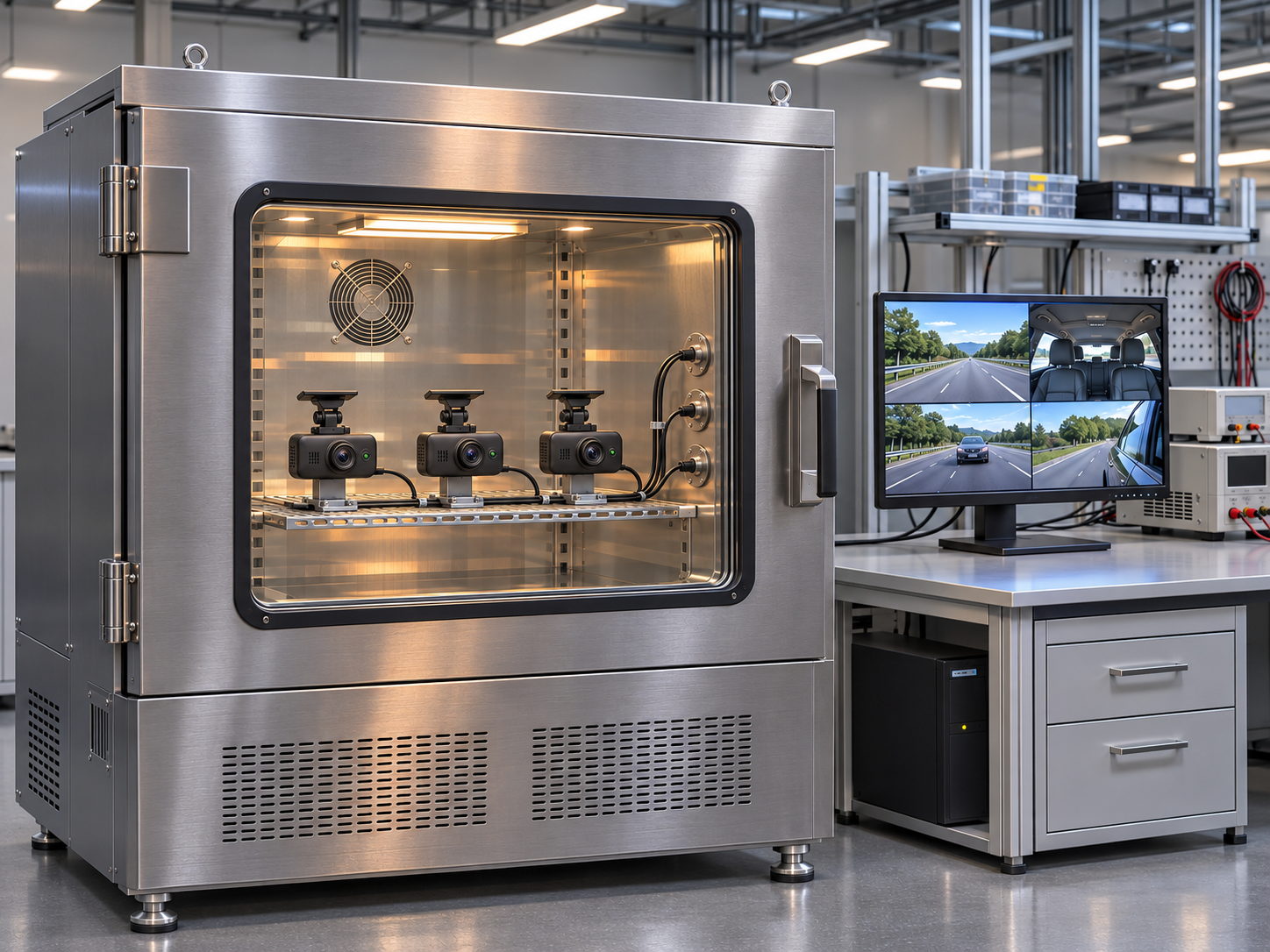
Engineers test full assemblies under industry standards like ISO 16750-4 and IEC 60068-2. These tests cover high-temperature storage at 85°C, low-temperature wake-up at -30°C to -40°C, and rapid thermal shock cycles. The camera also runs multi-channel burn-in tests inside a climate chamber. All cameras record at full bitrate while the chamber shifts from freezing cold to intense heat.
Vibration and power-cycle testing complete the process. The device runs through thousands of simulated engine starts and road vibrations. This testing catches loose connectors, weak solder joints, and firmware bugs before the product ever reaches a customer.
6. Fleet Validation Metrics for RMA Costs and Maintenance Burden
Commercial fleets look beyond the upfront price of a dash cam. A failed camera creates real costs through technician labor, vehicle downtime, and missing accident proof. Fleet managers should ask suppliers for five concrete system-level metrics:
| Validation Metric | What It Measures | Why It Matters to Fleets |
|---|---|---|
| MTBF & AFR | Mean Time Between Failures and Annualized Failure Rate across the full unit. | These numbers help fleets predict yearly RMA replacement volume and spare stock needs. |
| Thermal Throttling Threshold | The exact ambient temperature where multi-channel recording drops frames or stops. | Fleets in Southern Europe or the Southern US need full recording at high cabin heat. |
| Cold-Start Success Rate | The percentage of clean boots within 15 seconds after an overnight soak at -20°C or -30°C. | Nordic and Canadian fleets avoid missed morning shift footage and driver complaints. |
| Power-Loss File Integrity | The survival rate of active video files across 1,000+ sudden power cuts. | Zero file corruption ensures that crash footage stays playable after severe impacts. |
| Storage Health Alert Rate | The accuracy of early warnings before an SD card or eMMC chip wears out. | Early alerts let maintenance teams swap cards during routine service instead of emergency stops. |
Hardware reliability in automotive electronics never happens by accident. It comes from matching wide-temperature components with solid thermal engineering, smart firmware, and strict testing. At DANSKER, we build and validate every multi-channel dash cam to survive both Nordic freezes and Southern European heat waves. Drivers and fleet managers get clear, continuous video evidence whenever it matters most.